




Revolution Chapter 13: Five Years of Change
Five years had passed since the coup that reshaped the Republic. What had begun in secrecy and peril had, through persistence and reform, become a functioning and remarkably stable new order.
By the end of 2030, as the housing drive transformed skylines and the industrial sector surged, Harvey Jacobs and the Council turned their attention to a matter even more fundamental than shelter — food security.
For decades, South Africa’s agricultural sector had suffered from neglect, mismanagement, and political interference. Once the breadbasket of the region, it had been undermined by land uncertainty, violent crime, failing infrastructure, and erratic policy.
At the Council’s annual policy retreat held in Kimberley in early 2031, Jacobs opened proceedings with characteristic directness:
“No nation that cannot feed itself is free. Food is sovereignty; the farmer is the first defender of the Republic.”
Stabilising the Countryside
The Council recognised that agriculture could not thrive without security. Farm attacks, stock theft, and rural banditry had driven thousands of skilled farmers from the land, devastating production and morale.
Under the direction of Minister of Justice and Police Sakena Moloketsi, the government expanded the Rural Protection Command, a specialised branch of the police supported by the military and private security companies.
Modern surveillance systems, drones, and communication networks linked farming communities into rapid-response grids. Rural roads were repaired, and satellite patrol bases established to reduce response times. Within a year, incidents of rural violence dropped by more than 60%, and farmers — both commercial and emergent — reported a renewed sense of confidence.
Land Policy without Chaos
The Council also resolved one of the most contentious issues in post-apartheid history: land reform.
Rejecting populist demands for expropriation without compensation, Jacobs declared an unambiguous principle:
“The land will be shared, not seized. It will be productive, not political.”
Under the new National Agricultural Partnership Programme (NAPP), arable state-owned land was identified and released for redistribution. Additional parcels were purchased at fair market value from willing private sellers.
Prospective emergent farmers were required to undergo formal agricultural training, covering crop management, soil science, irrigation, and financial literacy. Only those who completed the programme successfully were allocated land, ensuring that recipients were equipped to succeed rather than destined to fail.
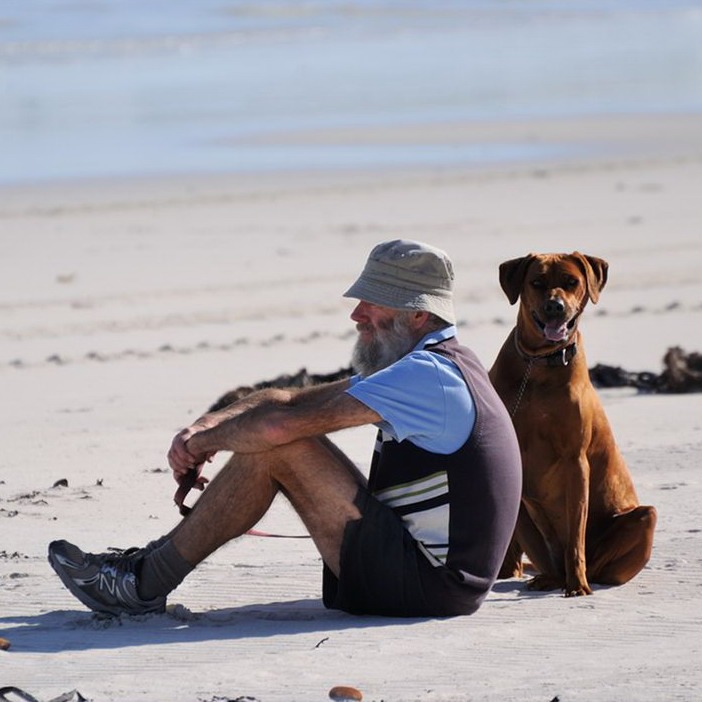
Each was paired with an experienced mentor — often a retired or semi-retired commercial farmer — who provided hands-on guidance for the first five years. These mentors were compensated through a state stipend and tax incentives.
Cooperative Farming and Shared Machinery
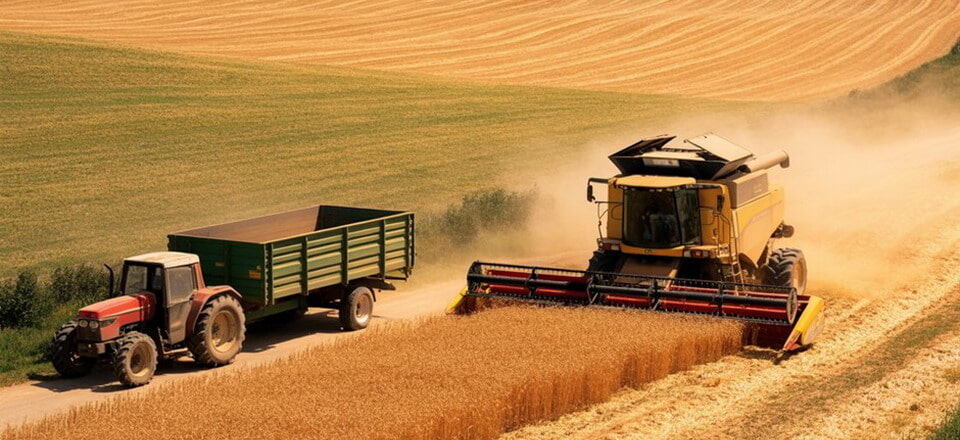
To overcome the barrier of capital costs, the government encouraged cooperative models. Machinery, irrigation systems, and storage facilities were shared among clusters of small farmers through locally managed agricultural cooperatives.
This model, adapted from successful schemes in Kenya and Brazil, allowed emerging farmers to access high-quality equipment without crippling debt. It also built community resilience, as members supported one another through fluctuating seasons and markets.
Expanding Infrastructure
Parallel to these reforms was a massive investment in rural infrastructure. Roads, silos, and cold-chain transport systems were upgraded to ensure that perishable produce reached markets quickly.
Provincial departments collaborated with the national Transport Ministry to rehabilitate thousands of kilometres of secondary roads linking rural areas to urban centres. Within two years, logistics costs dropped by nearly 25%, revitalising agricultural exports and local distribution alike.
Keeping People on the Land
A recurring problem in the previous decades had been the relentless migration of rural youth to overcrowded cities in search of opportunity. The Council moved decisively to reverse this trend by improving the quality of life in rural areas.
Basic services — electricity, healthcare, internet connectivity, and schooling — were extended to remote villages through targeted programmes. Agricultural towns were reclassified as rural development nodes, prioritised for investment in housing and micro-enterprise.
New vocational colleges specialising in farming technology, animal husbandry, and agribusiness management were established to train the next generation of rural entrepreneurs.
Technological Innovation
The Department of Agriculture and Food Security, working closely with universities and private-sector partners, launched a national drive for agricultural innovation.
Pilot projects introduced satellite-driven irrigation scheduling, soil-sensor technology, and drone-assisted crop monitoring. Mobile apps were developed to give farmers real-time access to weather data, pest alerts, and market prices.
Within five years, these technologies helped to increase average yields by 20–30%, especially among small and medium-sized producers.
Diversification and Sustainability
Environmental scientists on the Council insisted that expansion must not come at the cost of sustainability. Water management policies were tightened, with subsidies for drip irrigation and drought-resistant crops.
The government also incentivised agro-processing industries, encouraging local production of packaged foods, oils, and dairy products to reduce dependence on imports.
These value-added industries created jobs and boosted export capacity — particularly into Southern Africa, where demand for South African produce and processed goods rose steadily.
A Spirit of Cooperation
Perhaps the most remarkable change, however, was psychological. The rhetoric of racial hostility that had poisoned debates about land began to fade.
White commercial farmers, once vilified, were again regarded as national assets, while black emergent farmers were celebrated as the vanguard of renewal. Farmworkers, for the first time, were guaranteed profit-sharing agreements under the Rural Fairness Charter, ensuring that those who laboured on the land also shared in its rewards.
Jacobs summarised the new spirit succinctly:
“We have ended the war over land by ending the war in our hearts.”
HJ’s Address to the Nation
In his 2031 address, broadcast from the newly rebuilt Bloemfontein Agricultural College, Jacobs reflected on the transformation:
“When we took office, our shelves were empty, our fields neglected, our farmers afraid. Today, our granaries are filling, our markets are expanding, and the children of farmworkers are learning the science of soil and seed. This is how nations feed themselves — not by slogans, but by labour, courage, and knowledge.”
He praised the partnerships that had taken root between commercial agriculture, cooperatives, and the state, and ended with a call for vigilance:
“Let us never again confuse justice with vengeance. Let us never again destroy what feeds us in the name of politics. The soil belongs to all — but it yields only to those who care for it.”
The Harvest of Stability
By the close of 2032, agricultural exports had increased by nearly 40%, food prices stabilised, and South Africa once again achieved regional self-sufficiency.
In rural areas, crime rates fell, and young families began to return from the cities. Villages that had been fading into memory now hummed with life — grain silos, cooperatives, and small factories anchoring renewed local economies.
The countryside, long neglected, had become the quiet engine of the Revolution.
Read Revolution Chapter 1 here.
Read Revolution Chapter 2 here.
Read Revolution Chapter 3 here.
Read Revolution Chapter 4 here.
Read Revolution Chapter 5 here.
Read Revolution Chapter 6 here.
Read Revolution Chapter 7 here.
Read Revolution Chapter 8 here.
Read Revolution Chapter 9 here.
To view my longer work as an author, you can find me on Smashwords here.
This is my writer's blog and it's a pleasure to have your company. You’ll see that the site is designed to showcase my writing.
View ProfileXplorio is your local connection allowing you to find anything and everything about a town.
Read MoreFive years had passed since the coup that reshaped the Republic. What had begun in secrecy and peril had, through persistence and reform, become a functioning and remarkably stable new order.
By the fifth year after the coup, the Council turned its attention to a sector long neglected, yet essential to any sovereign nation: defence.
By 2031, as the housing and agricultural sectors surged forward, the Council turned its attention to another pillar of national recovery: healthcare.
The Second Address to the Nation, delivered on 15 December 2026, was the most widely watched broadcast in South Africa's modern history.
The the close of 2027, a year after the September Intervention, the effects of the Council's reforms had begun to reshape South African society in visible and measurable ways. While challenges persisted, there was a growing sense that the machine...
By the second year of the Council's stewardship, it had become evident that South Africa's future depended not merely on political stability or economic revival, but on the quality of its education system.