Mary Had a Little Lamb
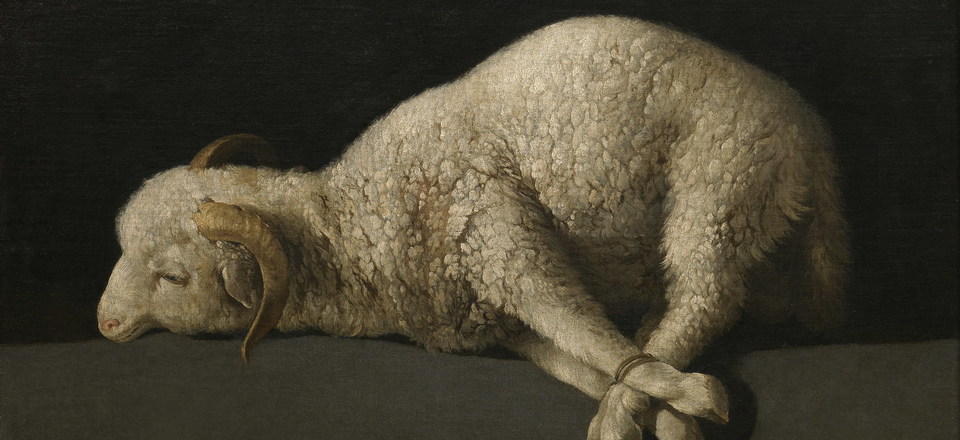
Mary had a little lamb. When it was six months old Mary’s father loaded it, along with 149 other little lambs, onto a truck and sent it to the abattoir. At the abattoir it received a blow to the forehead from a captive bolt stun gun. Then its throat was slit and its little heart pumped blood into a receptacle until it stopped beating. After being hung up to drain its head and feet were sawn off and it was skinned. It was cut open, top to bottom, and heart, liver and kidneys were removed before lungs, stomach and bladder were disposed of.
Mary’s little lamb, which was now a carcass, travelled down the line suspended from a meat hook until it reached a cold room, was weighed and stamped, and left hanging in the company of thousands of other carcasses for a week. After a week it was transported in a refrigerated truck to a supermarket and butchered into a number of cuts. Legs of lamb, lamb chops, lamb cutlets and braai ribs were neatly packed on polystyrene trays, sealed in kling wrap, weighed, labelled and put on display. At least a dozen different consumers bought bits and pieces of Mary’s little lamb and took them home to barbecue or roast. None of them knew that Mary still cried when she thought about her little lamb.
From the Nursery Rhymes and Fairy Tales collection.
To view my longer work as an author, you can find me on Smashwords here.
This is my writer's blog and it's a pleasure to have your company. You’ll see that the site is designed to showcase my writing.
View Profile
What is Xplorio?
Xplorio is your local connection allowing you to find anything and everything about a town.
Read More