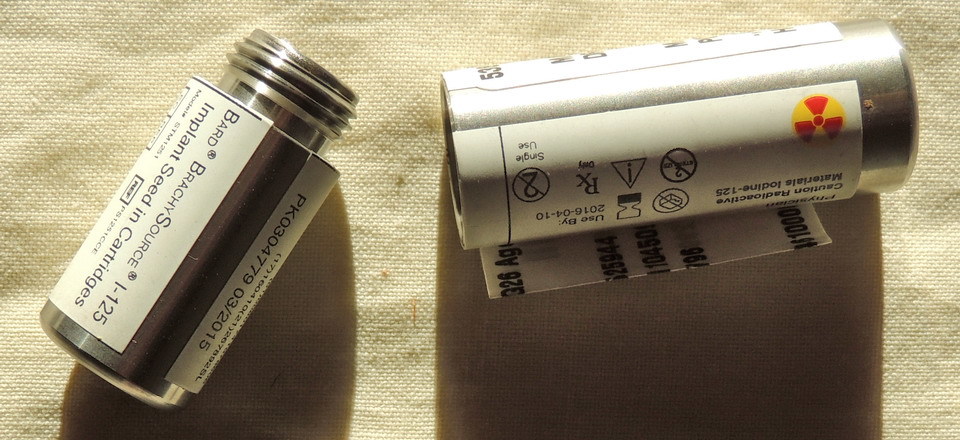
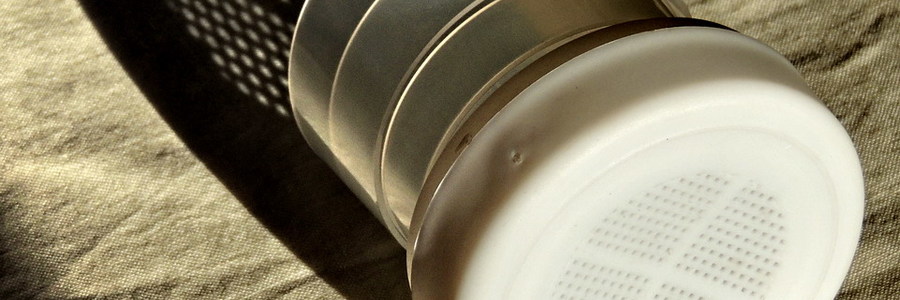
The Lead Cylinder and the Plastic Urine Sieve
In 2015 (26.3.15) I went to Dr M for a check-up. After shafting me with a gloved and lubricated forefinger she told me my prostate was hard and enlarged, and recommended I have a blood test. I complied and my PSA (Prostate Specific Antigen) count was 5.4. She suggested I see a urologist in Hermanus. This I eventually did on the 4th of August.
Dr J was a short man in his late thirties. Slight of build and fit looking, he was economical with his words and reluctant to explain anything more than once. His hands were small and soft. He used them to bend my penis in different directions, to pull down its foreskin and to palpate my testicles. This was before getting me to lie on my side with knees drawn up and giving my prostate a digital once-over. I also had to pee into a large paper cone held at an adjustable height by a contraption that measured volume and strength of urine flow.
Back on the bench he smeared cold gel on my lower abdomen and slowly slid about with a hand-held ultrasound sensor while looking at his laptop. I had a capacious bladder, he told me, and it was nowhere near empty.
Across his office desk he gave his diagnosis. My prostate was enlarged and might or might not be cancerous. It was probably not, but only a biopsy could determine this. It would also be wise to perform a resection, which entailed reducing the size of the prostate by cauterization.
You can read the rest of this post here.
To view my longer work as an author, you can find me on Smashwords here.
This is my writer's blog and it's a pleasure to have your company. You’ll see that the site is designed to showcase my writing.
View Profile
What is Xplorio?
Xplorio is your local connection allowing you to find anything and everything about a town.
Read More