



Revolution: Chapter 12 - Defending the Nation
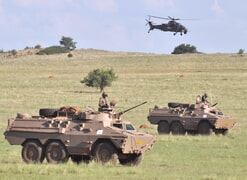
By the fifth year after the coup, the Council turned its attention to a sector long neglected, yet essential to any sovereign nation: defence.
Have you heard the joke about a warning sign near the brink of a dangerous cliff? They took the sign down because no one ever fell over the edge.
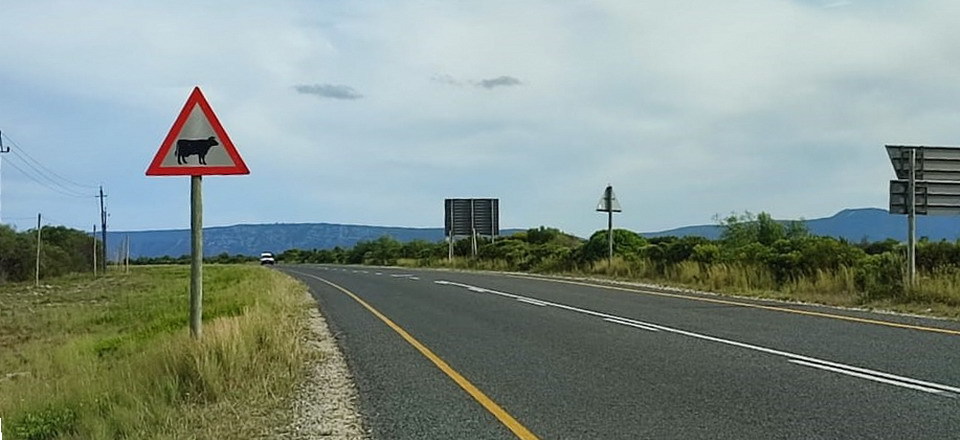
One might question why the traffic authorities don’t take down the old cattle hazard sign on the R43 near the Pearly Beach turnoff. After all, there are no cattle farms in the vicinity. The nearest, and only, farm where cattle are kept is Duinefontein, and that property is surrounded by a sturdy game fence.
The sign dates back to a time when it did serve a useful and necessary purpose though. Klein Hagelkraal, when it was owned by Charlie van Breda in the 1950’s was a cattle farm, as were all the other farms between here and Gansbaai. Over the next three decades farming beef cattle became unprofitable and was phased out. While Jerry Puren owned Klein Hagelkraal in the 1970’s, there was still enough pasture to support a small herd of cows that was milked twice a day, and some of the fresh milk was sold at the shop. Then, after his death in 1984, his assets were placed in a trust and the dairy closed down. His daughter, Nelia, was able to buy out the Pearly Beach Trust in 1986 and, when she married Jan Koekemoer, farming activity resumed. A limited number of beef cattle was kept for a while, but it became clear that the poor soil could not provide sustainable pasturage and the herd was disposed of. Operations have now switched to harvesting of flowers, cutting of firewood and maintaining a flock of some 400 goats. These hardy animals are able to survive largely on a diet of alien vegetation, of which there is no shortage.
The cattle sign on the R43 is of significance to me because it is a reminder of how life along this stretch of coastline has changed. For example, I can remember getting up in the morning on several occasions to find cows grazing in Broadway and wandering about unattended. That was after the big fire of 1980 when much fencing was destroyed and stray cows were a serious hazard on the road, especially at night. And, by the way, this lack of adequate fencing caused problems not only for motorists.
Around that time a dispute between two neighbouring farmers was reported in both the Cape Times and Die Burger. At the centre of the case was a bull owned by farmer A. Farmer B claimed that the animal had trespassed onto his property in order to have sex with some of his cows. He had complained to A, insisting that he should mend the broken fence dividing the two farms. He did not want any of his cows being impregnated by this ill-bred beast. Farmer A maintained that it was B’s responsibility to make the repairs, and it was not long before the errant suitor was again seen attempting to mount one of farmer B’s prize heifers. Farmer A claimed that B had then not only illegally apprehended his bull, but had surgically castrated the animal with a Newberry knife and emasculator before releasing it, thereby destroying its potential value. I never learned the outcome of this case, unfortunately, but it impressed upon me the importance of keeping one’s domesticated animals securely confined within one’s property.
Although we no longer have to worry about stray cattle on the road, they should leave the sign where it is. It might encourage drivers to be more vigilant and avoid running over the remaining wildlife that still inhabits our part of the world.
To view my longer work as an author, you can find me on Smashwords here.
This is my writer's blog and it's a pleasure to have your company. You’ll see that the site is designed to showcase my writing.
View ProfileXplorio is your local connection allowing you to find anything and everything about a town.
Read MoreBy the fifth year after the coup, the Council turned its attention to a sector long neglected, yet essential to any sovereign nation: defence.
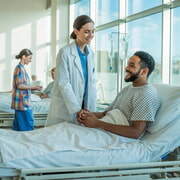
By 2031, as the housing and agricultural sectors surged forward, the Council turned its attention to another pillar of national recovery: healthcare.
The Second Address to the Nation, delivered on 15 December 2026, was the most widely watched broadcast in South Africa's modern history.
The the close of 2027, a year after the September Intervention, the effects of the Council's reforms had begun to reshape South African society in visible and measurable ways. While challenges persisted, there was a growing sense that the machine...
By the second year of the Council's stewardship, it had become evident that South Africa's future depended not merely on political stability or economic revival, but on the quality of its education system.
By the third anniversary of the September Revolution, the Council's achievements in restoring governance, stabilising the economy, and revitalising eduction had begun to bear fruit. Yet, as Harvey Jacobs repeatedly emphasised, "a nation cann...