



Revolution: Chapter 12 - Defending the Nation
By the fifth year after the coup, the Council turned its attention to a sector long neglected, yet essential to any sovereign nation: defence.
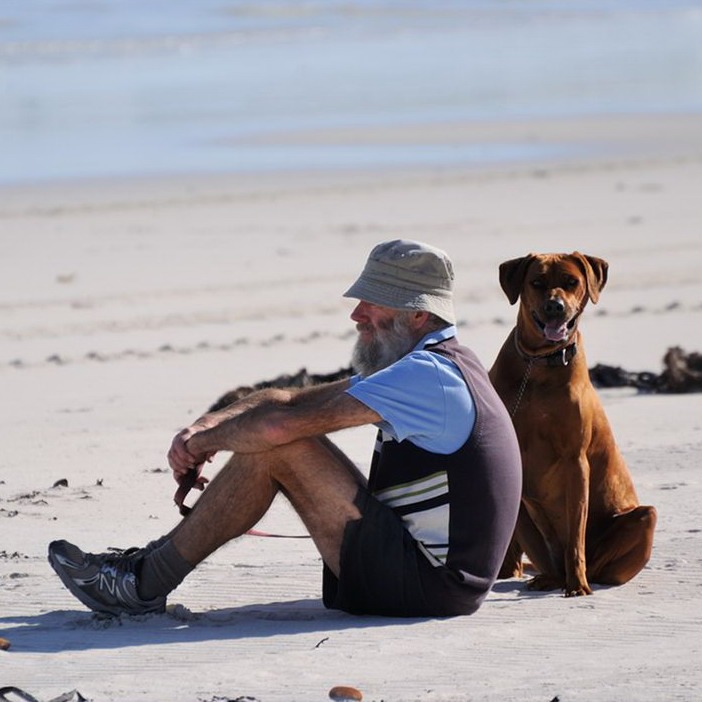
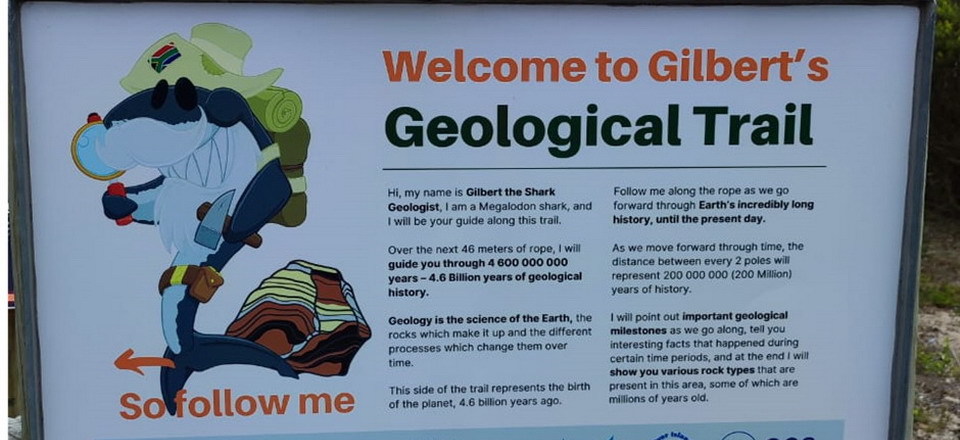
I recently took a short, slow hike along the Geological Trail at the Penguin Sanctuary near Kleinbaai. By ‘short’, I mean about a hundred metres, and by ‘slow’, I would say it took about an hour. The trail consists of a series of information boards that track the geological history of the Earth from 4.6 billion years ago to the present. I was accompanied by my wife, who read aloud to me, as I am three-quarters blind. She had a lot of reading to do but she is used to it and, anyway, she was also interested in the topic, so I didn’t feel it was an imposition on her.
The trail has been put together by members of the Dyer Island Conservation Trust under the guidance of Mike Dormer from the Overberg Geoscientist Group. The driving force behind the Trust is Wilfred Chivell, and I must congratulate him on an admirable project. Being freely accessible to the public, it is not only generally informative but serves as a valuable educational resource.
There are many samples of sedimentary, metamorphic and igneous rocks along the trail, and the description of how our Cape fold mountains were formed 155 million years ago is cleverly illustrated by reference to the low range right there behind Gansbaai. 155 million years. This stirred some memories of my year on Gough Island, which is only 1.5 million years old.
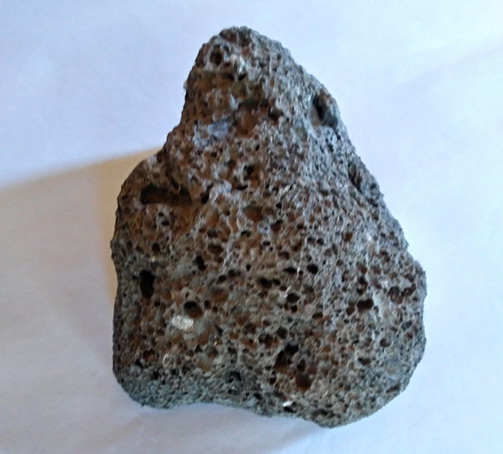
When we got home, I took down from on top of a bookshelf the chunk of rock I brought back from the island 42 years ago. I had picked it up from the barren ground high up on the Rowetts. Very light and porous, it is almost certainly a piece of pumice, or rock that is created when super-heated, highly pressurized rock is violently ejected from a volcano. It is estimated that Gough last erupted some 500,000 years ago, and that makes my pumice far younger than anything in the vicinity of Gansbaai and Pearly Beach.
I put the fragment of Gough Island back on the bookshelf, poured a glass of wine, and went and sat on the stoep in order to contemplate the passage of time. (See Die Oupa Sit op die Stoep.)
What this Geological Trails tells me, I mused, is that humans have been around for a very brief moment in the history of the planet, and that our species is certain to become extinct before much more geological time has elapsed. This thought, far from distressing me, was strangely calming.
Having watched the rapid proliferation of our species over the past seven decades, and seen the way we have trashed just about everywhere we have set foot., it gives me a sense of satisfaction and relief to know that one day the planet will be rid of us, and the forces of nature will eventually erase all trace of our vainglorious attempt to dominate the Earth and remain here for eternity, however long we imagined that might be.
To view my longer work as an author, you can find me on Smashwords here.
This is my writer's blog and it's a pleasure to have your company. You’ll see that the site is designed to showcase my writing.
View ProfileXplorio is your local connection allowing you to find anything and everything about a town.
Read MoreBy the fifth year after the coup, the Council turned its attention to a sector long neglected, yet essential to any sovereign nation: defence.
By 2031, as the housing and agricultural sectors surged forward, the Council turned its attention to another pillar of national recovery: healthcare.
The Second Address to the Nation, delivered on 15 December 2026, was the most widely watched broadcast in South Africa's modern history.
The the close of 2027, a year after the September Intervention, the effects of the Council's reforms had begun to reshape South African society in visible and measurable ways. While challenges persisted, there was a growing sense that the machine...
By the second year of the Council's stewardship, it had become evident that South Africa's future depended not merely on political stability or economic revival, but on the quality of its education system.
By the third anniversary of the September Revolution, the Council's achievements in restoring governance, stabilising the economy, and revitalising eduction had begun to bear fruit. Yet, as Harvey Jacobs repeatedly emphasised, "a nation cann...