



Revolution: Chapter 12 - Defending the Nation
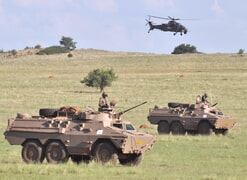
By the fifth year after the coup, the Council turned its attention to a sector long neglected, yet essential to any sovereign nation: defence.

As living conditions in the rest of the country rapidly deteriorate, a growing number of people are moving to the Western Cape, where provision of services is of a higher standard. There is also an exodus from cities to smaller towns, especially along the coast.
The Overstrand, from Rooi Els to Pearly Beach, has seen an influx of these migrants in the past five years and, although they have contributed to the local economy, they have unfortunately also brought with them some undesirable values and attitudes that threaten our environment and rural way of life. It is, therefore, important to encourage those who wish to settle here to respect their new surroundings and the people who have been living here for generations.
Accordingly, I propose the introduction of something similar to the requirements imposed on those applying for citizenship in a new country. Anyone wishing to buy property and/or settle permanently in the Gansbaai and Pearly Beach areas should be asked to apply for a Welcome Certificate. To qualify, they would have to:
Demonstrate a knowledge and appreciation of their new natural environment by being able to name and identify:
• 5 indigenous plants
• 3 invasive alien plant species
• 5 local garden birds
• 5 sea birds
• 3 local reptiles
• 3 animals still seen roaming wild
They should also undertake to abide by the following guidelines:
• New houses should not be ostentatious or vulgar in style and should not exceed 250 sq m in floor area.
• Houses should not be let as weekend party venues.
• No high walls and electric fences should be erected. The ‘fortress mentality’ in city suburbs is to be discouraged.
• No kikuyu grass and large roll-on lawns that require watering in the summer months should be planted.
• No indigenous vegetation should be removed without first consulting a local conservationist.
• No bright security lights should be installed unless they are on a motion sensor control. Light pollution hinders appreciation of the night sky, and deters the movement of nocturnal animals.
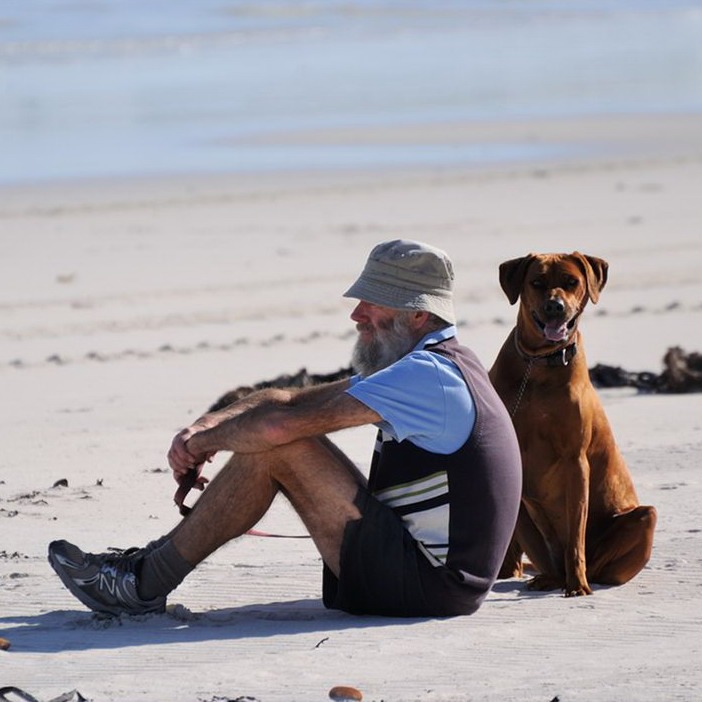
• Do not let a dog bark for more than one minute without silencing it, and do not leave it unattended when you are not at home.
• If you keep a cat, it should be neutered and fitted with a warning bell to prevent it from hunting birds.
Furthermore, applicants should visit Masakane, Blompark, and Eluxolweni to make them aware that not everyone in the area is a member of the privileged middle class.
They should also make themselves acquainted with the archaeological discoveries at Klipgat Cave and learn that there were people living along this coastline thousands of years before Europeans arrived.
Finally, they should be able to sing or recite a traditional song, like Daar Kom die Blouskuit or Wie Maak vir Gansbaai Lekker, and have read a local book, like Shark Alley Shootout or Strandveld Private Investigators.
Upon satisfying these requirements, the new arrivals will be congratulated and issued with their Certificates. Those who fail or refuse to comply will be informed that they are NOT WELCOME and will be urged to go back to where they came from.
To view my longer work as an author, you can find me on Smashwords here.
This is my writer's blog and it's a pleasure to have your company. You’ll see that the site is designed to showcase my writing.
View ProfileXplorio is your local connection allowing you to find anything and everything about a town.
Read MoreBy the fifth year after the coup, the Council turned its attention to a sector long neglected, yet essential to any sovereign nation: defence.
By 2031, as the housing and agricultural sectors surged forward, the Council turned its attention to another pillar of national recovery: healthcare.
The Second Address to the Nation, delivered on 15 December 2026, was the most widely watched broadcast in South Africa's modern history.
The the close of 2027, a year after the September Intervention, the effects of the Council's reforms had begun to reshape South African society in visible and measurable ways. While challenges persisted, there was a growing sense that the machine...
By the second year of the Council's stewardship, it had become evident that South Africa's future depended not merely on political stability or economic revival, but on the quality of its education system.
By the third anniversary of the September Revolution, the Council's achievements in restoring governance, stabilising the economy, and revitalising eduction had begun to bear fruit. Yet, as Harvey Jacobs repeatedly emphasised, "a nation cann...