



Revolution: Chapter 12 - Defending the Nation
By the fifth year after the coup, the Council turned its attention to a sector long neglected, yet essential to any sovereign nation: defence.


In the past 40 years I have witnessed several fires burning through the bush on the northern side of Broadway. Most of them occurred in late summer and were driven by an easterly wind. The vegetation they consumed was primarily Rooikrans (Acacia cyclops), the invasive Australian species that has displaced the indigenous fynbos.
About a year or two after each fire the seeds of this plant germinate and grow rapidly into saplings and reach maturity after five to ten years, ready to fuel another fire. Each time it happens the fire protection services are called on to contain the blaze, which usually destroys power lines and causes electricity outages, sometimes for several days.
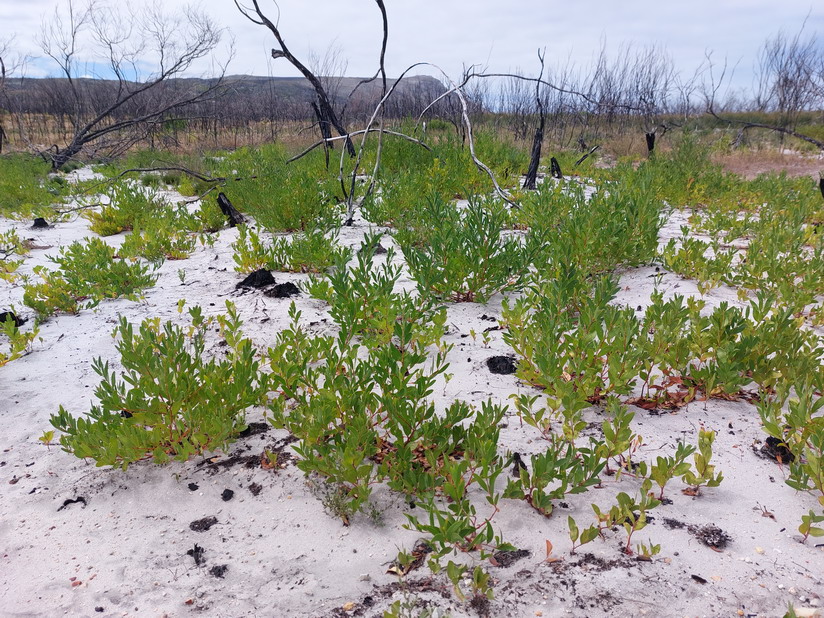
Having observed this repeated cycle of events, it strikes me as being a fine example of inadequate planning coupled with a lack of foresight. I ask myself, when will it dawn on the authorities that prevention is better than cure?
The most serious danger to Pearly Beach and surrounding areas is the unchecked proliferation of alien vegetation. To be surrounded by dense stands of Rooikrans, Wattle and Gum poses a serious threat to habitation and lives. Should a fire driven by gale force winds take hold, fire protection services might be powerless to contain it, as has been seen in southern Europe, Canada, Australia and, most recently, the Los Angeles area.
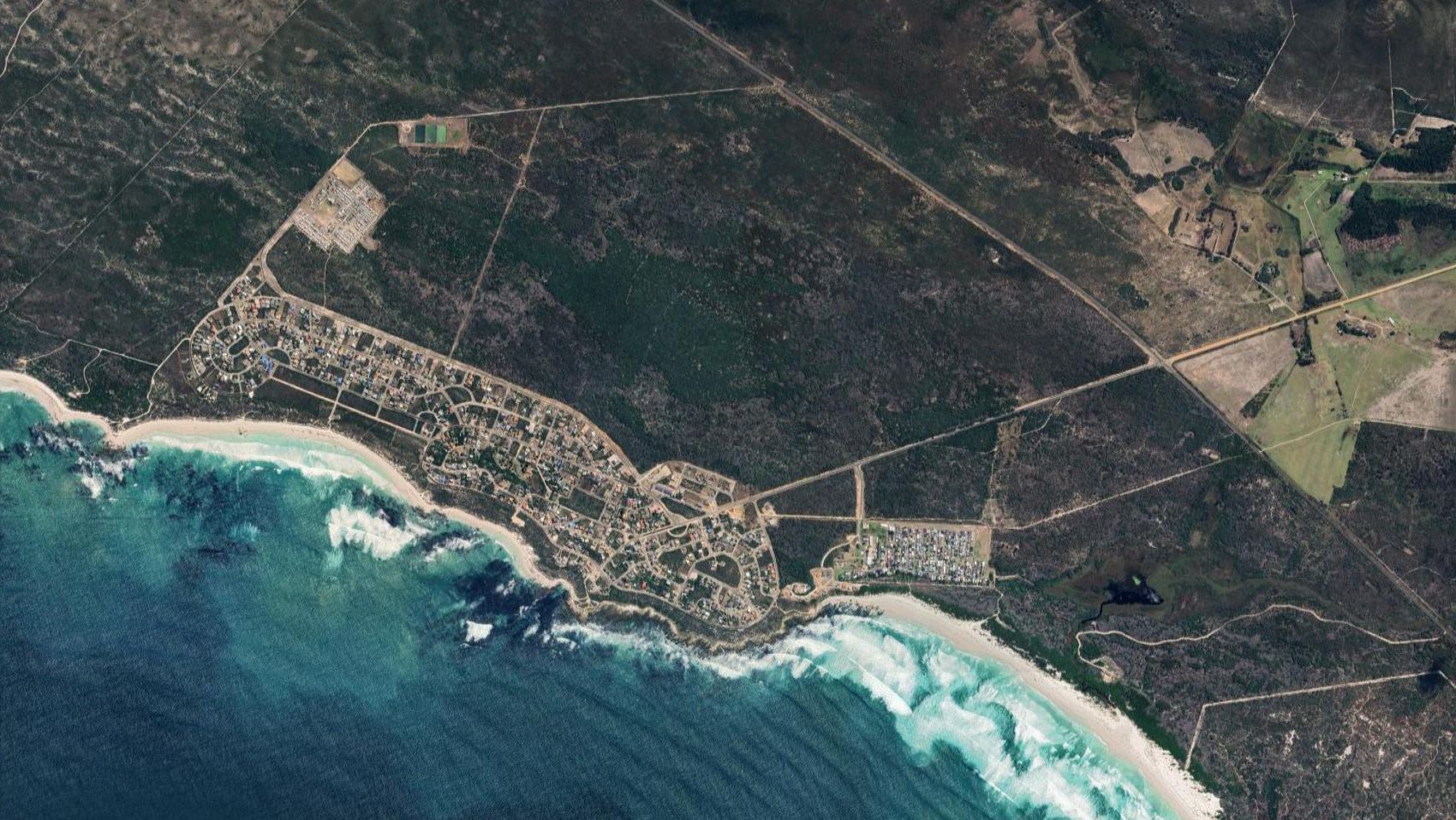
An aerial view of Pearly Beach shows the most vulnerable parts, should a major conflagration occur, to be the Resort and Eluxolweni, where there is a high concentration of residents. Then there is the Church and water treatment plant, the eastern end of Charlie van Breda, Church Street, the entire length of Broadway, as well as Boundary Road. All would be on the front line.
With the increasing number of extreme weather events associated with climate change, it has become a matter of urgency for fire and disaster management authorities to develop a holistic strategy that incorporates preventative measures and not only an emergency response capability.
The Proposal
This would involve a partnership between land owners, the Overstrand Municipality and government departments. A long-term plan should be devised, and the systematic clearing of all alien vegetation, from Die Dam through to De Kelders, should begin. The plan should include the creation and maintenance of firebreaks and the establishment of a permanent team to monitor and eradicate subsequent new growth.
Although all this would require considerable funding, the investment would eventually yield dividends. Fighting a fire, especially when aerial support is called in, is extremely expensive. In this regard, there would be long-term saving as firefighting became a matter of backburning low fynbos scrub from an accessible firebreak. The programme would initially create hundreds of job opportunities and permanent employment for maintenance teams in the future. In addition, as the indigenous vegetation re-established itself, the promotion of eco-tourism would benefit the accommodation, hospitality and local business establishments.
Surely it makes sense to take this proposal seriously and break the cycle of growing fuel for fire after fire?
(The following photos - © Guy Martin - were taken seven years ago in March 2018 when a fire swept past Pearly Beach.)
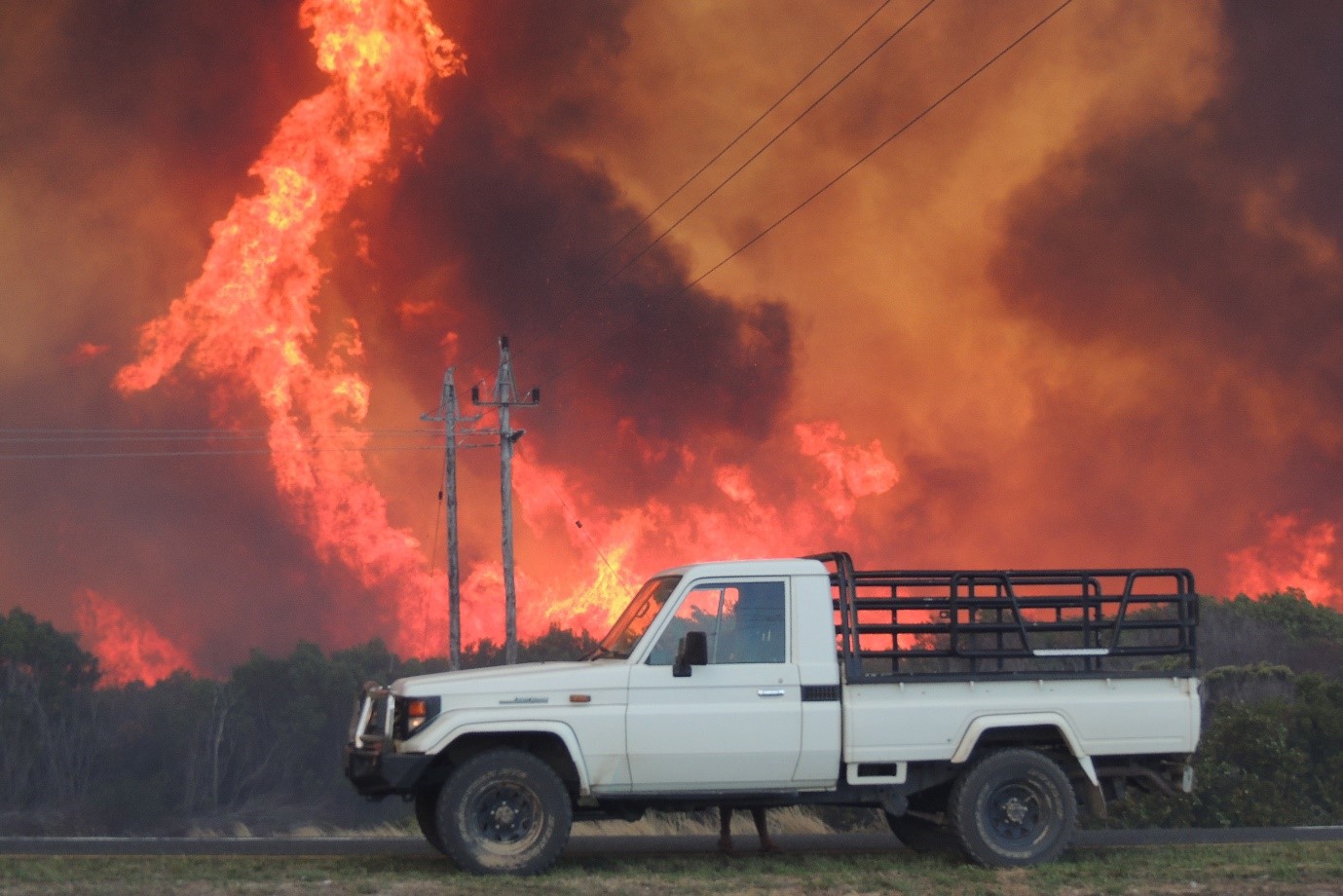
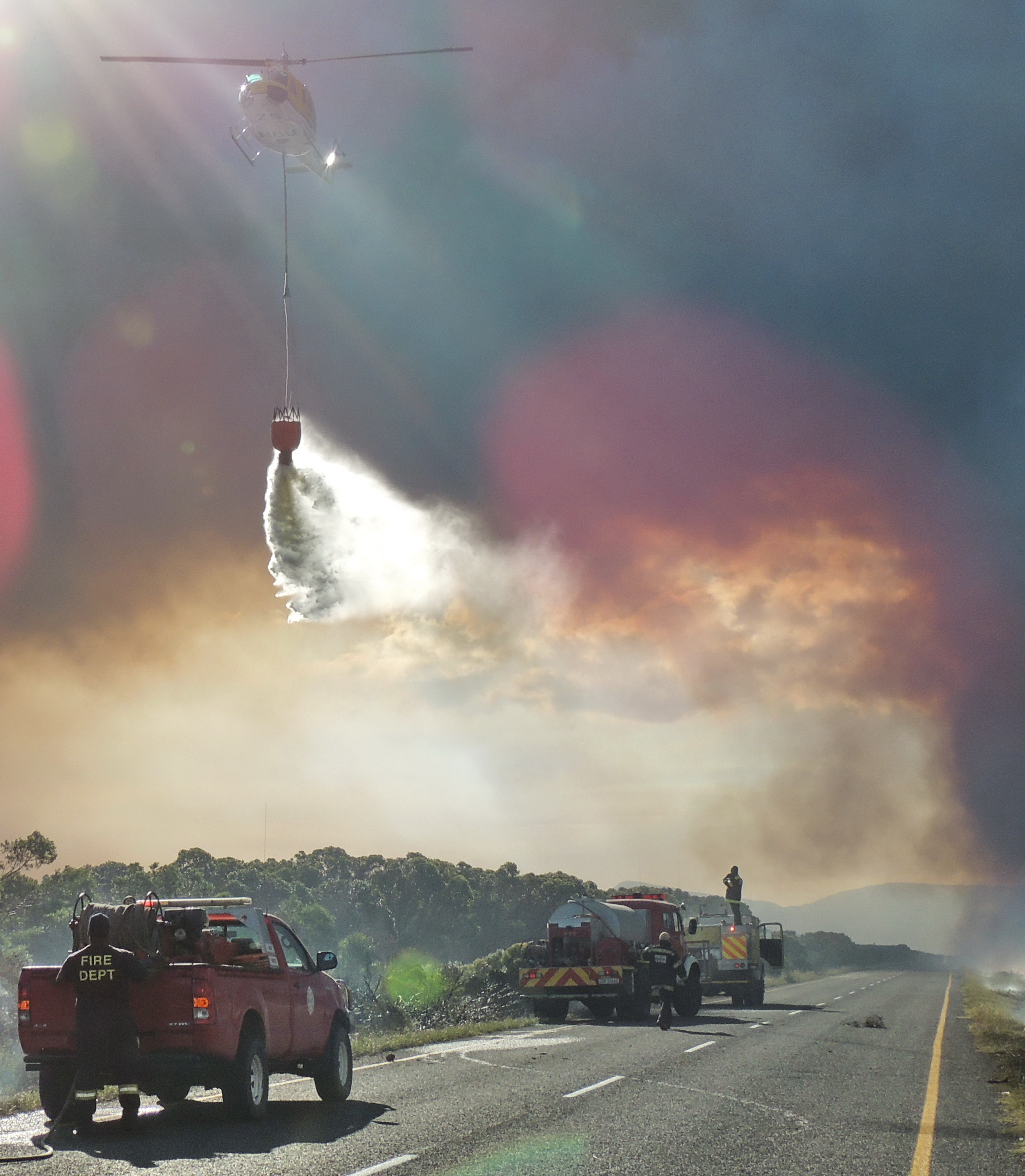
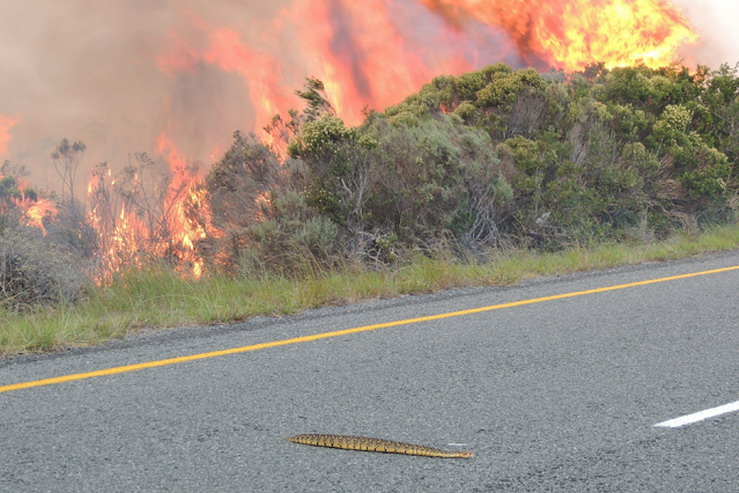
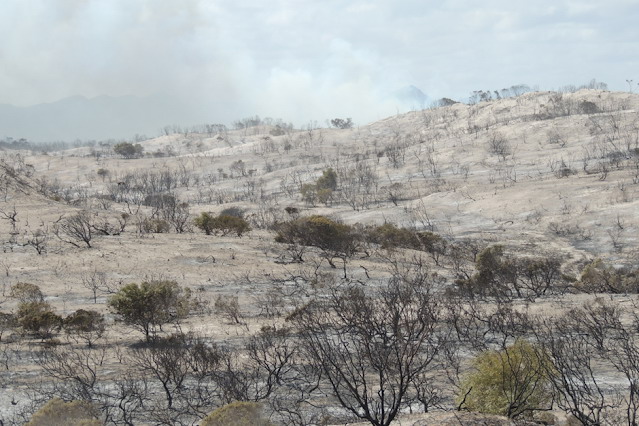
The real danger we face comes from the authorities’ inability to prioritize immediate and long-term preventative measures that would help to ensure the safety of all who live in our area. To understand the psychology behind this reluctance to take the required preemptive action, I turned to AI for some analysis, and this is what ChatGPT came up with:
‘The tendency to prioritize immediate responses over prevention is closely related to several psychological concepts. The relevant and psychological terms and analyses include:
Temporal Discounting
Definition: Temporal discounting refers to the tendency to value immediate rewards or outcomes more highly than future rewards or outcomes, even if the future rewards are greater.
Similarity to Response vs. Prevention: Preventative measures often involve investing time, effort, or resources now for benefits that will only materialize in the future (e.g., reducing wildfire risk). Temporal discounting can make these long-term benefits seem less appealing compared to the immediate and tangible results of responding to a crisis.
Hyperbolic Discounting
Definition: Hyperbolic discounting is a specific form of temporal discounting where the value of future outcomes decreases more steeply as the delay to receiving them increases. This can result in inconsistent decision-making, where people might prefer the immediate reward now but would choose the delayed reward if both options were further in the future.
Application to Disaster Management: When faced with a choice between spending resources on wildfire prevention (future benefit) or on immediate disaster response, individuals or organizations may disproportionately favor the immediate need due to the steep discounting of long-term benefits.
Neglect of Low-Probability, High-Impact Events
Definition: Humans often struggle to prioritize actions to mitigate low-probability but high-impact events, a phenomenon rooted in bounded rationality and limited attention. Preventative measures for disasters like wildfires may seem less urgent because the occurrence of a disaster is probabilistic and uncertain, even if the long-term risk is significant.
Relevance: Once a wildfire occurs, the probability is no longer uncertain - it is happening now, and immediate action feels necessary and justified.
Action Bias
Definition: Action bias refers to the psychological tendency to prefer taking action, especially in response to crises, even if inaction or preemptive action would be more effective. People often feel the need to "do something" in response to disasters, leading to a focus on reactive measures.
Connection: Preventative actions are often less visible and can feel less satisfying compared to the clear and direct impact of crisis response.
Present Bias
Definition: Present bias is the tendency to give disproportionate weight to the present moment, often at the expense of the future. This can lead to underinvestment in long-term solutions like wildfire prevention, as the immediate benefits are not felt in the present.
Addressing the Issue
To counteract these biases, behavioral interventions such as framing, commitment devices, and policy nudges can help. For example:
Framing wildfire prevention efforts as saving money and lives in the long run can make the benefits more tangible.
Mandating a portion of disaster response budgets for prevention can serve as a commitment device to balance immediate and long-term priorities.
Understanding these psychological tendencies is key to designing systems and policies that encourage a more balanced approach to prevention and response.’
To view my longer work as an author, you can find me on Smashwords here.
This is my writer's blog and it's a pleasure to have your company. You’ll see that the site is designed to showcase my writing.
View ProfileXplorio is your local connection allowing you to find anything and everything about a town.
Read MoreBy the fifth year after the coup, the Council turned its attention to a sector long neglected, yet essential to any sovereign nation: defence.
By 2031, as the housing and agricultural sectors surged forward, the Council turned its attention to another pillar of national recovery: healthcare.
The Second Address to the Nation, delivered on 15 December 2026, was the most widely watched broadcast in South Africa's modern history.
The the close of 2027, a year after the September Intervention, the effects of the Council's reforms had begun to reshape South African society in visible and measurable ways. While challenges persisted, there was a growing sense that the machine...
By the second year of the Council's stewardship, it had become evident that South Africa's future depended not merely on political stability or economic revival, but on the quality of its education system.
By the third anniversary of the September Revolution, the Council's achievements in restoring governance, stabilising the economy, and revitalising eduction had begun to bear fruit. Yet, as Harvey Jacobs repeatedly emphasised, "a nation cann...