



Revolution: Chapter 12 - Defending the Nation
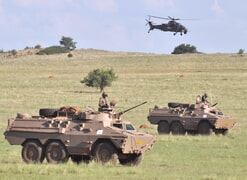
By the fifth year after the coup, the Council turned its attention to a sector long neglected, yet essential to any sovereign nation: defence.
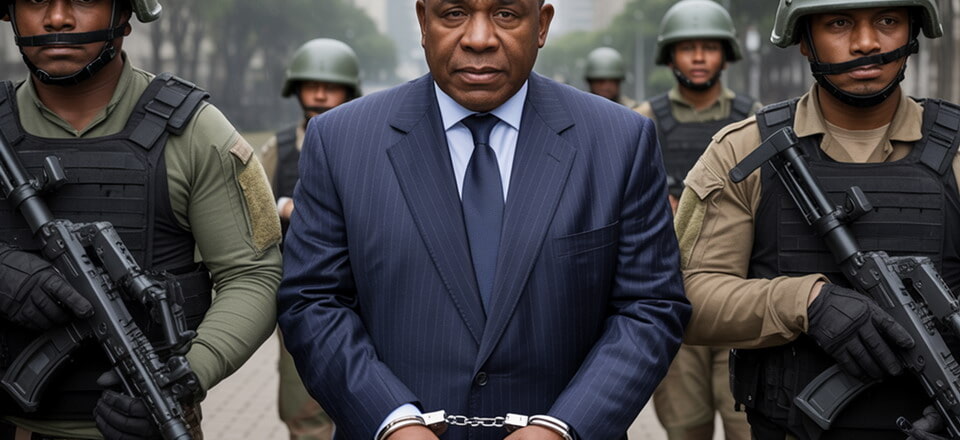
Revolution is a gripping political chronicle of South Africa’s rebirth after a 2026 coup that topples a failing government and sparks an age of reform. Led by the principled academic Harvey Jacobs, a coalition of soldiers, scholars, and civil rights leaders rebuild the nation on fairness, discipline, and Ubuntu.
From collapsing institutions and mass unemployment arises a technocratic government that dares to do what others feared: print money to create jobs, merge ministries to end corruption, and replace chaos with competence. As industries revive and crime falls, new schools, hospitals, and homes rise across the land.
Through Jacobs’s televised addresses and the Council’s policy debates, Revolution traces how moral leadership, economic imagination, and social renewal turn a country from despair to dignity. Five years later, with growth surging and democracy beckoning, Jacobs faces his final test — to relinquish power or extend reform.
Told as a historical chronicle, Revolution is both cautionary and inspiring — a vision of how nations may rebuild themselves through courage, reason, and moral conviction.
To view my longer work as an author, you can find me on Smashwords here.
This is my writer's blog and it's a pleasure to have your company. You’ll see that the site is designed to showcase my writing.
View ProfileXplorio is your local connection allowing you to find anything and everything about a town.
Read MoreBy the fifth year after the coup, the Council turned its attention to a sector long neglected, yet essential to any sovereign nation: defence.
By 2031, as the housing and agricultural sectors surged forward, the Council turned its attention to another pillar of national recovery: healthcare.
The Second Address to the Nation, delivered on 15 December 2026, was the most widely watched broadcast in South Africa's modern history.
The the close of 2027, a year after the September Intervention, the effects of the Council's reforms had begun to reshape South African society in visible and measurable ways. While challenges persisted, there was a growing sense that the machine...
By the second year of the Council's stewardship, it had become evident that South Africa's future depended not merely on political stability or economic revival, but on the quality of its education system.
By the third anniversary of the September Revolution, the Council's achievements in restoring governance, stabilising the economy, and revitalising eduction had begun to bear fruit. Yet, as Harvey Jacobs repeatedly emphasised, "a nation cann...