



Revolution: Chapter 12 - Defending the Nation
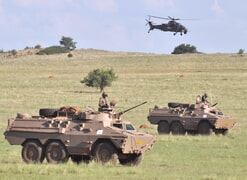
By the fifth year after the coup, the Council turned its attention to a sector long neglected, yet essential to any sovereign nation: defence.
Memory Project is my attempt at writing a memoir. Over a period of three or four months in 2016, I listened to a BBC series called ‘A History of the World in 100 Objects.’ The objects were all from the British Museum, starting with a lump of rock that was a Stone Age tool, and ending with a solar-powered lamp with charger. It occurred to me that this could be a way of exploring my memory, using pictures of items as stepping stones. I realised that each item could in turn lead to others, and yet others, exponentially. The objects could include books, photographs, letters, works of art and music. If I didn’t get bored, this project could keep me busy until I kicked the bucket. Here is an example of what I am talking about.
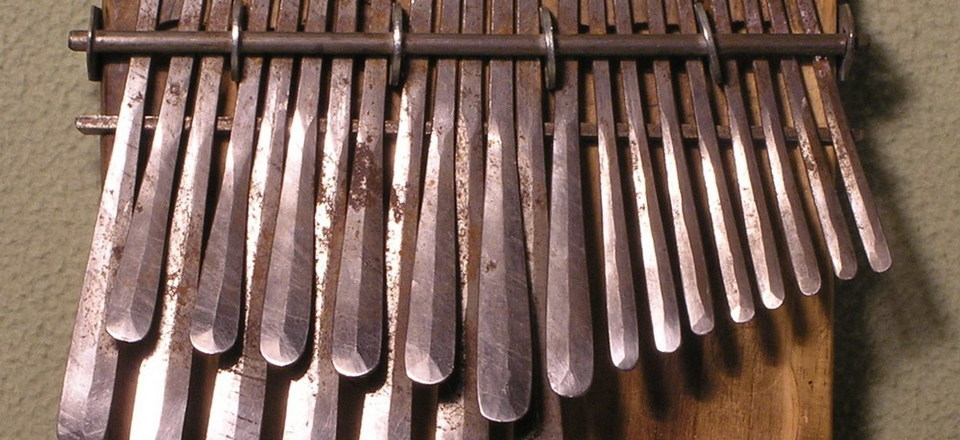
An Mbira
I bought this mbira while on a hitch-hiking trip through Rhodesia in 1976. ‘A member of the lamellaphone family of musical instruments, it consists of a wooden board (often fitted with a resonator) with attached staggered metal tines, and is played by holding the instrument in the hands and plucking the tines with the thumbs.’ (Wikipedia.) My mbira has six tines, but it is common for others to have twenty or more. It is considered to be an African invention and can be traced back to at least 3000 years.
On one occasion as a child of about eight or nine, I visited the houseboy squatting before his fire. I found him busy hammering a length of fencing wire on a short piece of steel rail he had scrounged from a friend working on the Railways. Every few minutes he would stop to heat the wire in the flames and then resume pounding it flat. When I asked him what he was doing he said he was making a mbira. About a week later the instrument was completed and I saw that the flattened wire had been cut into lengths to form the tines. For a resonator, he used an empty Cobra stoep polish tin. A piece of rubber cut from an inner tube was stretched over the mouth of the tin to close it like a drum skin. I was impressed with his ingenuity and enjoyed listening to him singing and humming as he plucked the tines with his thumbnails. The ‘boy’ in question was Joseph, and I was sad when he resigned after a year or two in order to return to his wife and children in the Native Reserve.
To view my longer work as an author, you can find me on Smashwords here.
This is my writer's blog and it's a pleasure to have your company. You’ll see that the site is designed to showcase my writing.
View ProfileXplorio is your local connection allowing you to find anything and everything about a town.
Read MoreBy the fifth year after the coup, the Council turned its attention to a sector long neglected, yet essential to any sovereign nation: defence.
By 2031, as the housing and agricultural sectors surged forward, the Council turned its attention to another pillar of national recovery: healthcare.
The Second Address to the Nation, delivered on 15 December 2026, was the most widely watched broadcast in South Africa's modern history.
The the close of 2027, a year after the September Intervention, the effects of the Council's reforms had begun to reshape South African society in visible and measurable ways. While challenges persisted, there was a growing sense that the machine...
By the second year of the Council's stewardship, it had become evident that South Africa's future depended not merely on political stability or economic revival, but on the quality of its education system.
By the third anniversary of the September Revolution, the Council's achievements in restoring governance, stabilising the economy, and revitalising eduction had begun to bear fruit. Yet, as Harvey Jacobs repeatedly emphasised, "a nation cann...