



Revolution: Chapter 12 - Defending the Nation
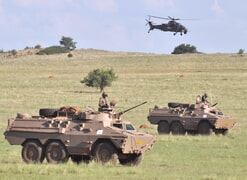
By the fifth year after the coup, the Council turned its attention to a sector long neglected, yet essential to any sovereign nation: defence.
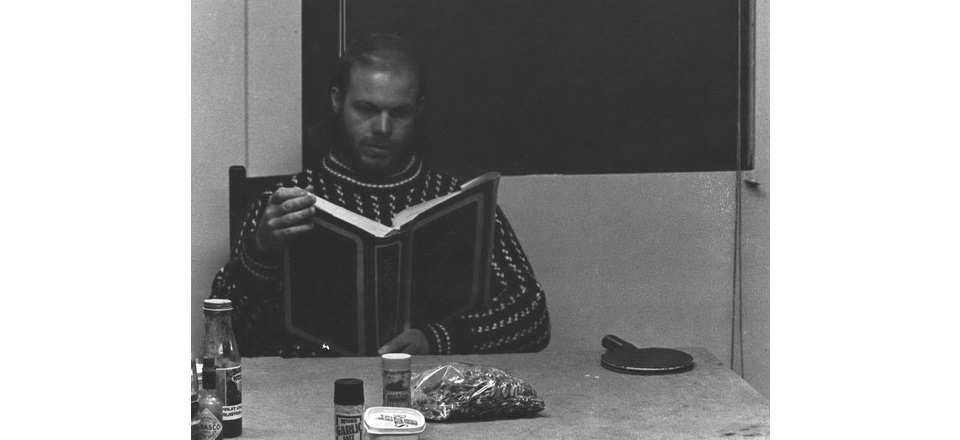
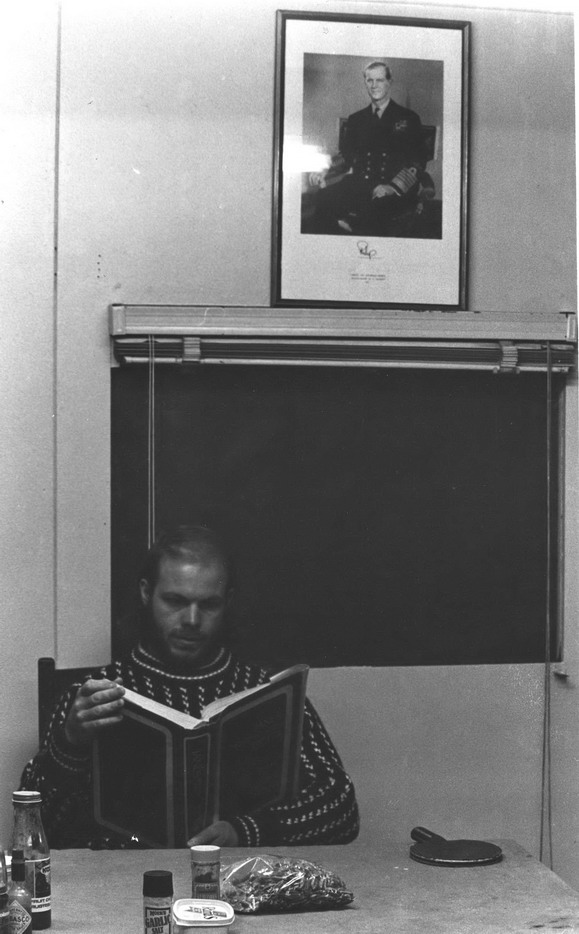
I took this photograph of Gordon McIntyre sitting at the dining table in Gough House in 1981. As Radio Operator it was Gordon’s duty to send six-hourly weather reports to the South African Weather Service HQ in Pretoria. Above his head is the portrait of Prince Philip that commemorates his brief visit to the island in 1957.
Gough is part of the British Overseas Territory of Saint Helena, Ascension and Tristan da Cunha, and South Africa operates its strategic weather station with the permission of the United Kingdom. That explains why the portrait was still on display despite the strained relations that existed between Britain and the Apartheid government. To the right of His Highness there was a framed picture of the State President of South Africa, the Rt. Hon. Marais Viljoen. A patriotic Afrikaner from a previous team had placed a toilet seat over Philip’s picture as a gesture of resentful disrespect. Loathing the Christian Nationalists as I did, I had no compunction in moving the piece of sanitaryware over for the President to stare through. I was then able to look up at his repugnant features without feeling an urge to spit or throw something.
This reminiscence was prompted by Prince Philip’s death on 11 April 2021 at the age of 99.
Here is a link to an article recording the Duke of Edinburgh’s visit to Gough Island in 1957.
To view my longer work as an author, you can find me on Smashwords here.
This is my writer's blog and it's a pleasure to have your company. You’ll see that the site is designed to showcase my writing.
View ProfileXplorio is your local connection allowing you to find anything and everything about a town.
Read MoreBy the fifth year after the coup, the Council turned its attention to a sector long neglected, yet essential to any sovereign nation: defence.
By 2031, as the housing and agricultural sectors surged forward, the Council turned its attention to another pillar of national recovery: healthcare.
The Second Address to the Nation, delivered on 15 December 2026, was the most widely watched broadcast in South Africa's modern history.
The the close of 2027, a year after the September Intervention, the effects of the Council's reforms had begun to reshape South African society in visible and measurable ways. While challenges persisted, there was a growing sense that the machine...
By the second year of the Council's stewardship, it had become evident that South Africa's future depended not merely on political stability or economic revival, but on the quality of its education system.
By the third anniversary of the September Revolution, the Council's achievements in restoring governance, stabilising the economy, and revitalising eduction had begun to bear fruit. Yet, as Harvey Jacobs repeatedly emphasised, "a nation cann...