



Revolution: Chapter 12 - Defending the Nation
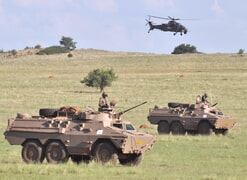
By the fifth year after the coup, the Council turned its attention to a sector long neglected, yet essential to any sovereign nation: defence.

It’s strange that I have bothered to hang around this long, considering all the nihilistic thoughts that populate my brain.
I was about 17 when it first occurred to me to ask myself, ‘What’s the point in being alive?’ And over the next 50-odd years I have repeated this obtuse question, and I still come up with the same answer: No point. I am not able to justify my existence, and as a consequence, have failed to develop a socially acceptable outlook on three important levels. Firstly, how I perceive myself; secondly, how I view my fellow human beings; and thirdly, how I see my place in the cosmos.
How do I see myself? Most people work very hard at constructing a heroic image of themselves. The moment I get started on any such image building activity I am stopped in my tracks by the sound of sniggering at my shoulder. I suddenly feel embarrassed, as if I had been observed practising a smile in the mirror, or someone had opened the door to find me busy … Read more.
To view my longer work as an author, you can find me on Smashwords here.
This is my writer's blog and it's a pleasure to have your company. You’ll see that the site is designed to showcase my writing.
View ProfileXplorio is your local connection allowing you to find anything and everything about a town.
Read MoreBy the fifth year after the coup, the Council turned its attention to a sector long neglected, yet essential to any sovereign nation: defence.
By 2031, as the housing and agricultural sectors surged forward, the Council turned its attention to another pillar of national recovery: healthcare.
The Second Address to the Nation, delivered on 15 December 2026, was the most widely watched broadcast in South Africa's modern history.
The the close of 2027, a year after the September Intervention, the effects of the Council's reforms had begun to reshape South African society in visible and measurable ways. While challenges persisted, there was a growing sense that the machine...
By the second year of the Council's stewardship, it had become evident that South Africa's future depended not merely on political stability or economic revival, but on the quality of its education system.
By the third anniversary of the September Revolution, the Council's achievements in restoring governance, stabilising the economy, and revitalising eduction had begun to bear fruit. Yet, as Harvey Jacobs repeatedly emphasised, "a nation cann...