



Revolution: Chapter 12 - Defending the Nation
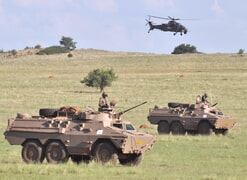
By the fifth year after the coup, the Council turned its attention to a sector long neglected, yet essential to any sovereign nation: defence.

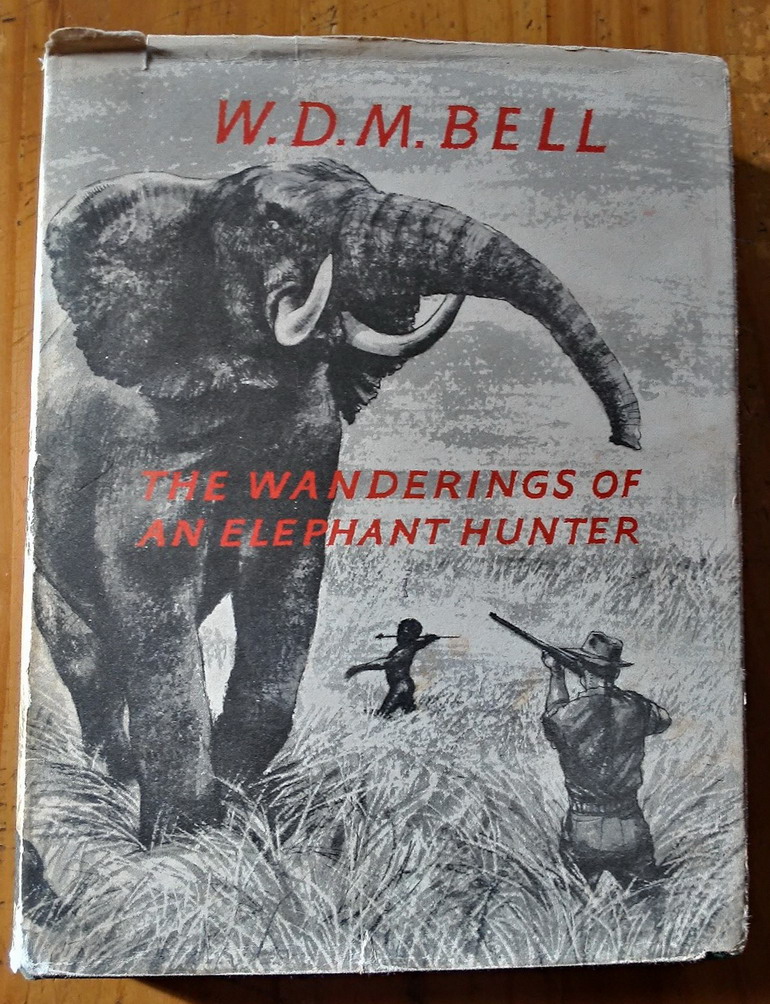
I bought this for R10 at the second-hand book stall outside the Standard Bank in Hermanus one Saturday morning about 25 years ago. It was first published in 1923 and my copy is the 1958 edition. After many years of being out of print it was brought back as an annotated digital version by Big Game Books in 2018. Favourable reviews of the book can be found on Goodreads.
I regard hunting as deplorable, and when I read that the book is ‘Lavizhly illustrated from on-the-spot sketches by the author,’ my low opinion of hunters, including WDM Bell, was confirmed. The cover drawing, which shows a tiny figure with a rifle confronting a charging elephant of laughably enormous proportions, is clearly meant to demonstrate courage of the intrepid white man as he holds his ground and takes aim. However, I did find the book fairly well written, entertaining and factually as well as historically interesting.
Read the full article here.
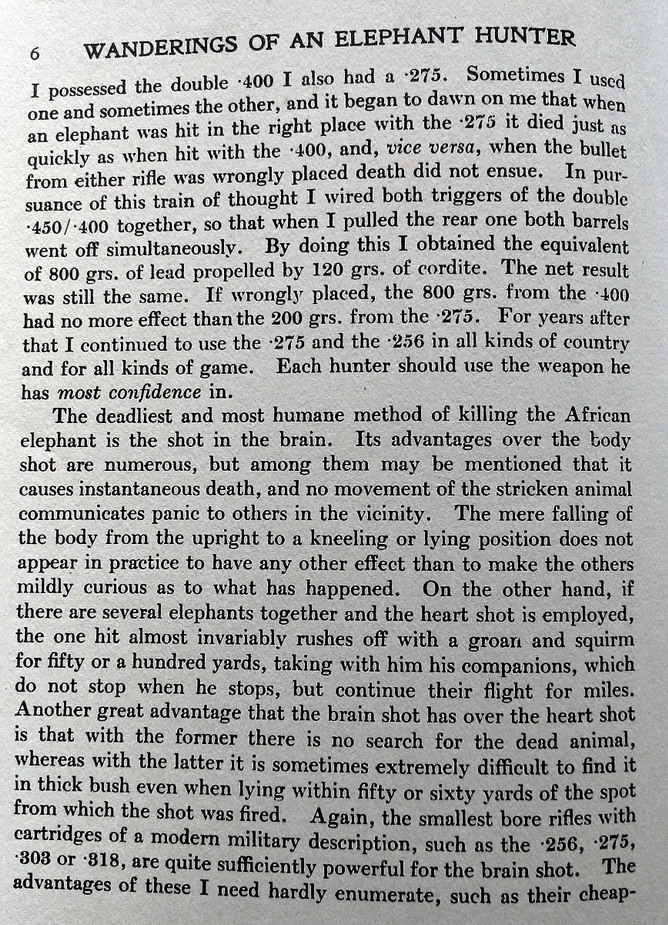
(You can read Sell Me a Gun for free on Smashwords HERE.)
To view my longer work as an author, you can find me on Smashwords here.
This is my writer's blog and it's a pleasure to have your company. You’ll see that the site is designed to showcase my writing.
View ProfileXplorio is your local connection allowing you to find anything and everything about a town.
Read MoreBy the fifth year after the coup, the Council turned its attention to a sector long neglected, yet essential to any sovereign nation: defence.
By 2031, as the housing and agricultural sectors surged forward, the Council turned its attention to another pillar of national recovery: healthcare.
The Second Address to the Nation, delivered on 15 December 2026, was the most widely watched broadcast in South Africa's modern history.
The the close of 2027, a year after the September Intervention, the effects of the Council's reforms had begun to reshape South African society in visible and measurable ways. While challenges persisted, there was a growing sense that the machine...
By the second year of the Council's stewardship, it had become evident that South Africa's future depended not merely on political stability or economic revival, but on the quality of its education system.
By the third anniversary of the September Revolution, the Council's achievements in restoring governance, stabilising the economy, and revitalising eduction had begun to bear fruit. Yet, as Harvey Jacobs repeatedly emphasised, "a nation cann...