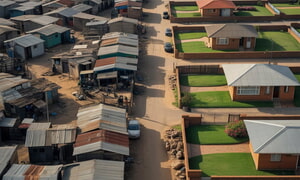




Revolution: Chapter 12 - Defending the Nation
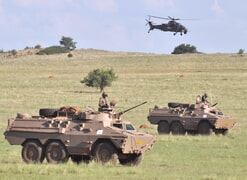
By the fifth year after the coup, the Council turned its attention to a sector long neglected, yet essential to any sovereign nation: defence.
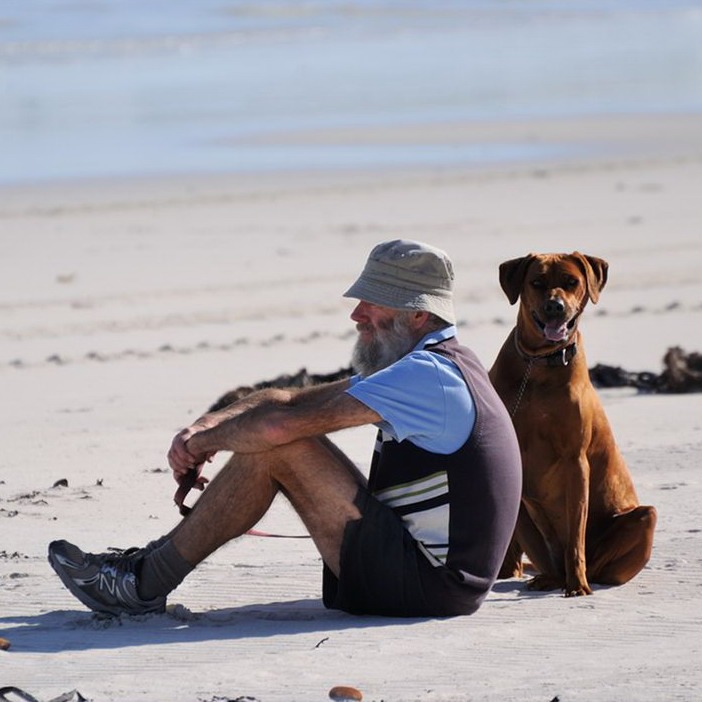
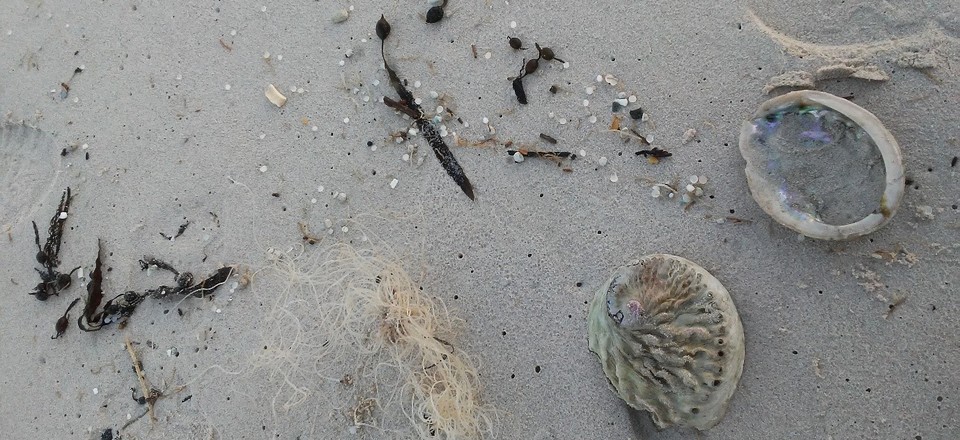
The sun was setting. At the top of the steps leading down to the beach a lookout was on his phone. At the bottom of the steps a man in a wet suit was busy shucking perlemoen. We passed him and made our way over the dune to the shore. The tide had turned and was beginning to recede. It was a perfect winter’s evening with just a faint breeze from the south, the sea was milky blue and untroubled. As we walked, we could hear men in the water calling to each other and ahead of us the sunset haze was taking on colour. She stooped to pick up a tangle of fishing line. Beside it on the sand the sea had left bits of degrading kelp and a scattering of nurdles and microplastics. At the boardwalk we paused to absorb the deceptively tranquil scene and then headed for home.
Journalism students were required, as part of the course, to conduct an interview with an interesting person, write it up and submit it to the lecturer. It could be an individual or joint effort, so Matt was more than happy to team up with Ed on this one. Otherwise, he probably wouldn’t have bothered at all.
Ed chose the subject: a 55-year-old Sociology lecturer who was about to retire. ‘Interview with a Cynic’, he wrote at the top of a page in his notebook.
“What I like about this guy,” Ed told Matt, “Is his uncompromising honesty. He tells it how it is, not how it’s supposed to be.”
They went to the lecturer’s house in a residential area overlooking the town. He was a tall, fit-looking man with thick curly hair that was going grey. Ed asked him about his academic career and his plans for the future, and he and Matt took notes. Some of his comments were to stick in Matt’s memory and come back to him later.
Q: Do you have children?
A: No. My wife and I decided not to obey the biological imperative to reproduce ourselves. It was a conscious choice because we believed there was no long-term future for humanity. As atheists we don’t believe that we were put here for a purpose, and we don’t believe in a supernatural power who has a plan for us. On the contrary, we feel sure that our species will be a short-lived one in the context of geological time. Nor do we adhere to the idea that we have evolved into a superior organism and now hold a privileged position in the universe.
Q: Are you interested in, or concerned about, what happens in the future once you’ve gone?
A: No, not at all. If I had had children, I would have been obliged, as a genetically programmed social animal, to pretend that I have a link to the future and that it’s important I care about what might happen to my offspring. While my intellect tells me this is absurd. Not having offspring though, I don’t have to pretend.
Q: I see you drive a large SUV. Don’t you care about global warming and the impact you have on the environment?
A: No, for two reasons. Firstly, I think it’s far too late to have any influence on climate change. And secondly, not being an admirer of the human race, I feel it would be better for all other organisms if humans were to disappear from the planet. Climate change might help to bring that about rather sooner than later.

This is my writer's blog and it's a pleasure to have your company. You’ll see that the site is designed to showcase my writing.
View ProfileXplorio is your local connection allowing you to find anything and everything about a town.
Read MoreBy the fifth year after the coup, the Council turned its attention to a sector long neglected, yet essential to any sovereign nation: defence.
By 2031, as the housing and agricultural sectors surged forward, the Council turned its attention to another pillar of national recovery: healthcare.
The Second Address to the Nation, delivered on 15 December 2026, was the most widely watched broadcast in South Africa's modern history.
The the close of 2027, a year after the September Intervention, the effects of the Council's reforms had begun to reshape South African society in visible and measurable ways. While challenges persisted, there was a growing sense that the machine...
By the second year of the Council's stewardship, it had become evident that South Africa's future depended not merely on political stability or economic revival, but on the quality of its education system.
By the third anniversary of the September Revolution, the Council's achievements in restoring governance, stabilising the economy, and revitalising eduction had begun to bear fruit. Yet, as Harvey Jacobs repeatedly emphasised, "a nation cann...