



Revolution: Chapter 12 - Defending the Nation
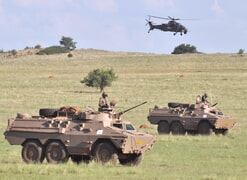
By the fifth year after the coup, the Council turned its attention to a sector long neglected, yet essential to any sovereign nation: defence.
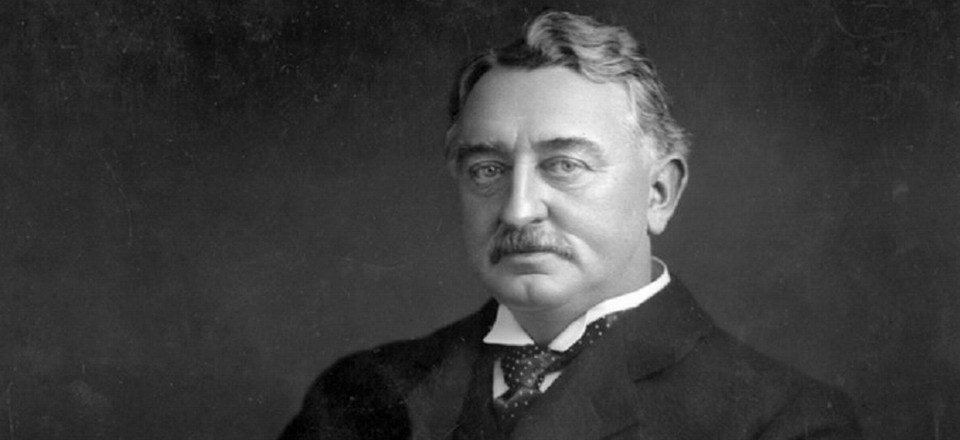
Rhodes was born in 1853 and died at the age of 48 in 1902. His short life was packed with achievement, much of them being of a dubious ethical nature. He was shrewd, ruthless and domineering. He believed in the superiority of the Anglo-Saxon race and maintained that Africans lived in a state of savagery, labelling their customs barbaric. By the time he was 35 he had amassed a fortune, was gaining political influence and dreamed of expanding the British Empire. It was his intention to build a Cape to Cairo railway linking all the British colonies on the continent. Advancing across the Limpopo was the first step in this strategy.
The Martin family moved to the country named after this megalomaniac in 1956 when I was five years old. I later attended Cecil John Rhodes (CJR) Junior School. In the school, foyer stood a larger-than-life statue of the great imperialist. He was striking some sort of heroic or statesmanlike pose and was painted in gold. In 1969 and 1970 I was a student at UCT and often had to pass another statue of this man. I was by then more politically aware and can still remember the pleasure I derived from spitting on this effigy when no one was looking. I have also spat on his bronze head up at that ridiculous monument with its Greek temple, horseman and stone lions. I have never spat on the statue in the Company Gardens, but I have regarded it with derision as he points north and proclaims “Your hinterland is there!” I have neither urinated on nor thrown excrement at any statue. I did, however, piss on a plaque attached to a large chunk of rock in a remote part of South West Africa. The inscription boasted that this was the biggest meteorite in the world. As far as I know, this has got nothing to do with Rhodes, and I only mention it to further illustrate the disrespectful attitude towards authority and convention that I developed in my youth and have retained to this day.

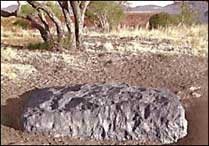
This is what the meteorite looked like when I visited it in the 70’s.
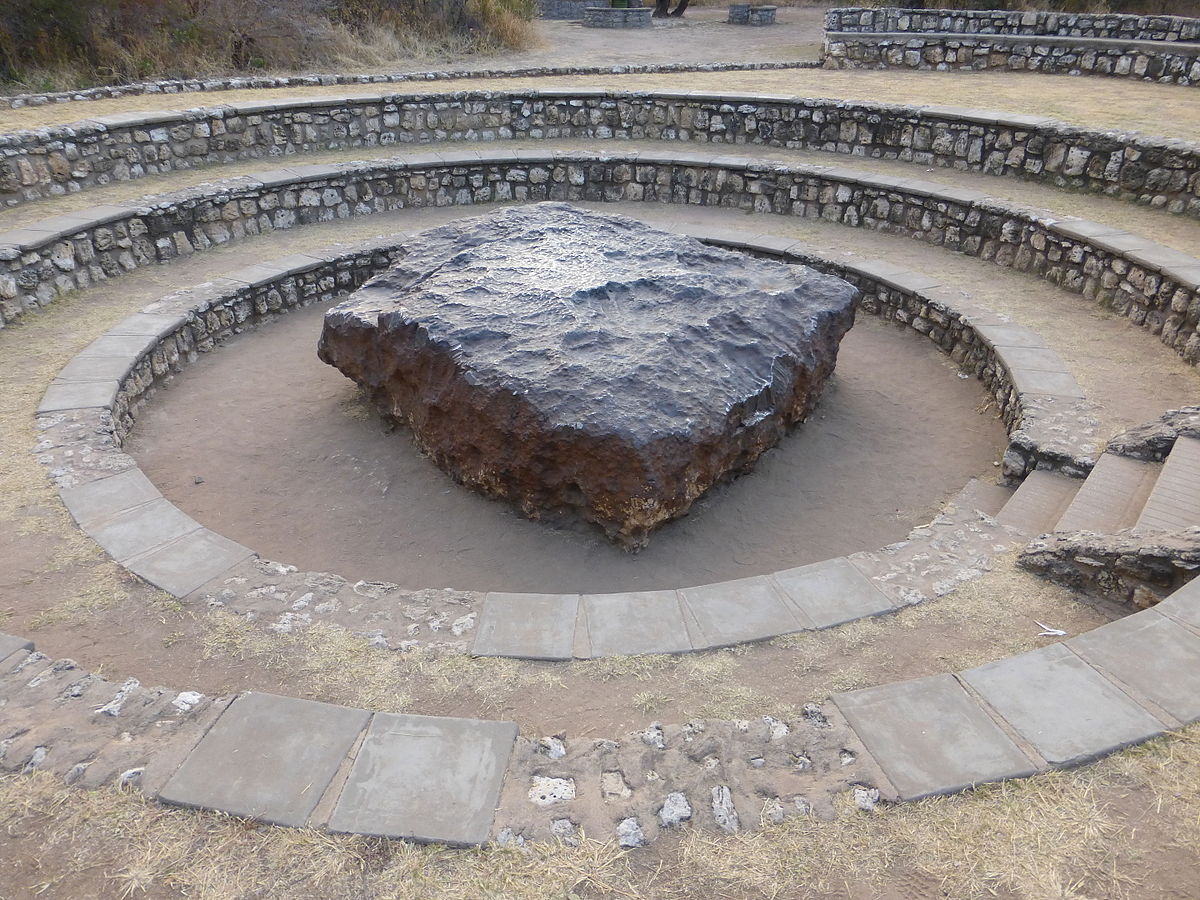
In more recent times the Hoba meteorite has been excavated and circular stone steps lead down to the 60-ton lump of iron and nickel. I am sure that in Namibia it is strictly forbidden to urinate on a national monument.
To view my longer work as an author, you can find me on Smashwords here.
This is my writer's blog and it's a pleasure to have your company. You’ll see that the site is designed to showcase my writing.
View ProfileXplorio is your local connection allowing you to find anything and everything about a town.
Read MoreBy the fifth year after the coup, the Council turned its attention to a sector long neglected, yet essential to any sovereign nation: defence.
By 2031, as the housing and agricultural sectors surged forward, the Council turned its attention to another pillar of national recovery: healthcare.
The Second Address to the Nation, delivered on 15 December 2026, was the most widely watched broadcast in South Africa's modern history.
The the close of 2027, a year after the September Intervention, the effects of the Council's reforms had begun to reshape South African society in visible and measurable ways. While challenges persisted, there was a growing sense that the machine...
By the second year of the Council's stewardship, it had become evident that South Africa's future depended not merely on political stability or economic revival, but on the quality of its education system.
By the third anniversary of the September Revolution, the Council's achievements in restoring governance, stabilising the economy, and revitalising eduction had begun to bear fruit. Yet, as Harvey Jacobs repeatedly emphasised, "a nation cann...