



Revolution: Chapter 12 - Defending the Nation
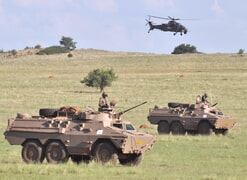
By the fifth year after the coup, the Council turned its attention to a sector long neglected, yet essential to any sovereign nation: defence.

During my childhood I saw my mother in tears on many occasions. Her distress stemmed from hardship and homesickness. Separated from her family by 6000 miles, in a foreign country on an outlandish continent she often felt lonely and deprived of both physical and emotional support. It was a struggle bringing up three young children on the meagre income my father could provide, and at times she would become tearful. It was always the same lament containing recrimination aimed at my father, and vitriol for the hostile environment and the horrible people she shared it with. Why had he forced her to leave family and friends and come to South Africa where she knew no one, and then, just as she was settling down, why had he insisted on dragging her and the children off to this godforsaken place?
It took her a good 20 years to shake off her homesickness and chronic nostalgia for London and the English way of life. I used to think my father had made a huge mistake in bringing her to Africa. Right up until after her death I held the notion that she just wasn’t the pioneering type. But in the last decade or so I have come to realise just how strong and adaptable she was. Considering her background and her gentle nature, it must have taken a great deal of bravery to endure some of the demands that were made on her.
One of the ordeals that she had to endure was being left alone with three young children for a week or two at a time while my father was away in the bush. Admittedly there was little crime in Gwelo in those days, but the fact that my father bought her a gun is an indication of how nervous she must have been at night.
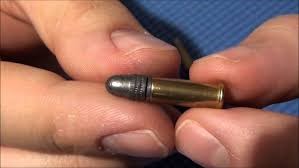
The gun was a Beretta .22 pocket pistol. It was so small it looked like a toy, and the cartridges were tiny. When he brought it home, he showed her how it worked, and set up a tin drum against the kaia wall to shoot at. She fired a few shots but was clearly reluctant and apprehensive, and relieved when the exercise was over. She used to sleep with the loaded pistol under her pillow, but I doubt whether she would have been able to use it had there been an intruder.
After my father’s death my brother asked me if I was interested in taking over the gun, which was unregistered and therefore an illegal firearm. Foolishly, I declined and now regret it. It would have been a valuable memento and I know my son would be keen to try firing it. Maybe Alan still has it stashed away somewhere?
To view my longer work as an author, you can find me on Smashwords here.
This is my writer's blog and it's a pleasure to have your company. You’ll see that the site is designed to showcase my writing.
View ProfileXplorio is your local connection allowing you to find anything and everything about a town.
Read MoreBy the fifth year after the coup, the Council turned its attention to a sector long neglected, yet essential to any sovereign nation: defence.
By 2031, as the housing and agricultural sectors surged forward, the Council turned its attention to another pillar of national recovery: healthcare.
The Second Address to the Nation, delivered on 15 December 2026, was the most widely watched broadcast in South Africa's modern history.
The the close of 2027, a year after the September Intervention, the effects of the Council's reforms had begun to reshape South African society in visible and measurable ways. While challenges persisted, there was a growing sense that the machine...
By the second year of the Council's stewardship, it had become evident that South Africa's future depended not merely on political stability or economic revival, but on the quality of its education system.
By the third anniversary of the September Revolution, the Council's achievements in restoring governance, stabilising the economy, and revitalising eduction had begun to bear fruit. Yet, as Harvey Jacobs repeatedly emphasised, "a nation cann...