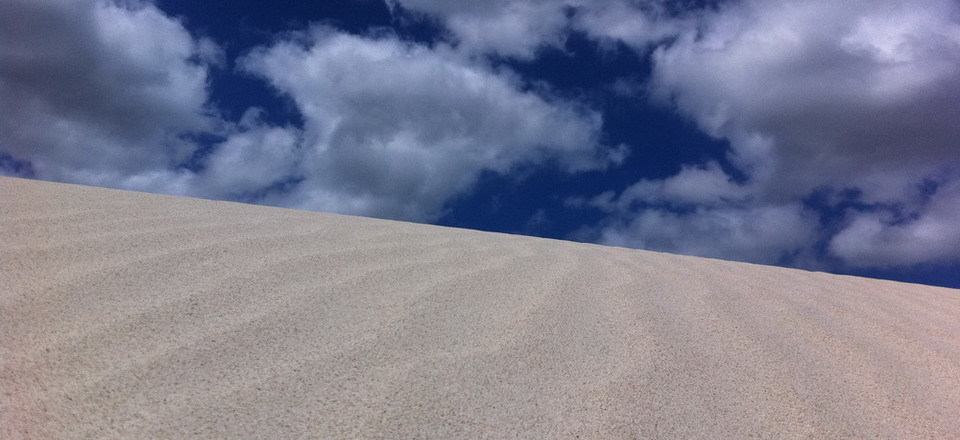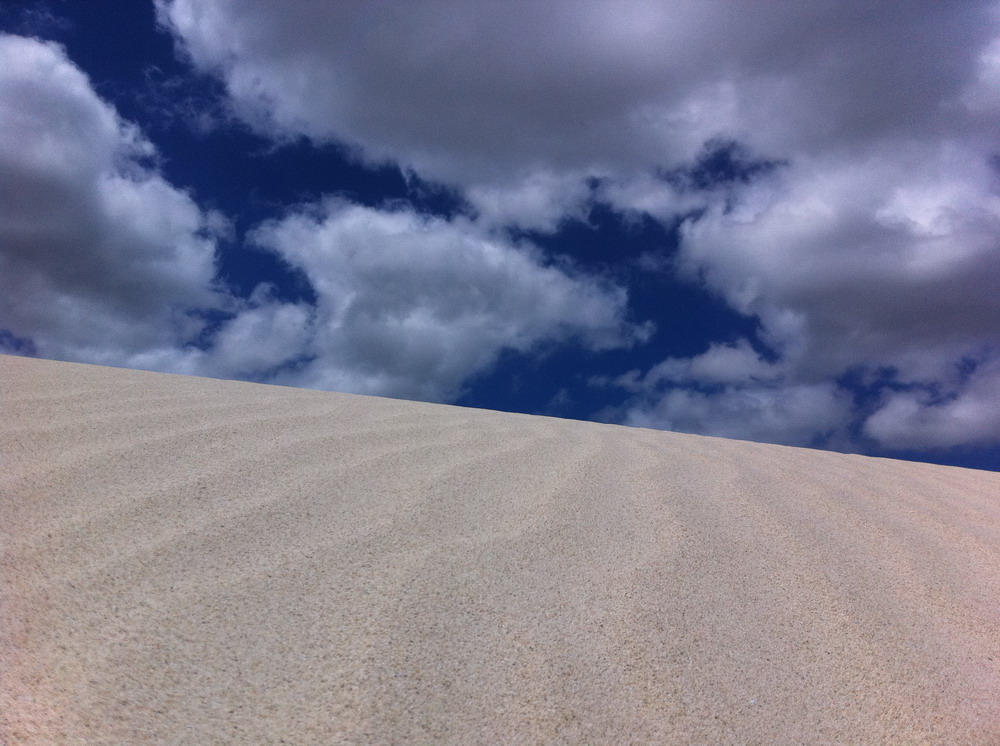
Sand is formed when rocks are eroded by wind and water over millions of years. Only sharp angular sand produced by water erosion can be used in construction, and the fine rounded sand found in deserts and on most beaches is unsuitable for making cement and concrete. With the growth of the human population and rapidly increasing urbanisation, sand has become the second most consumed raw material after water. An estimated 50 billion tons is being used up annually, with many countries having to import what will soon be a scarce, non-renewable (on the human time scale) commodity.
This information does not surprise me. It is further evidence of our collective refusal to acknowledge that there are far too many of us and that a global economy based on growth and consumption is unsustainable.
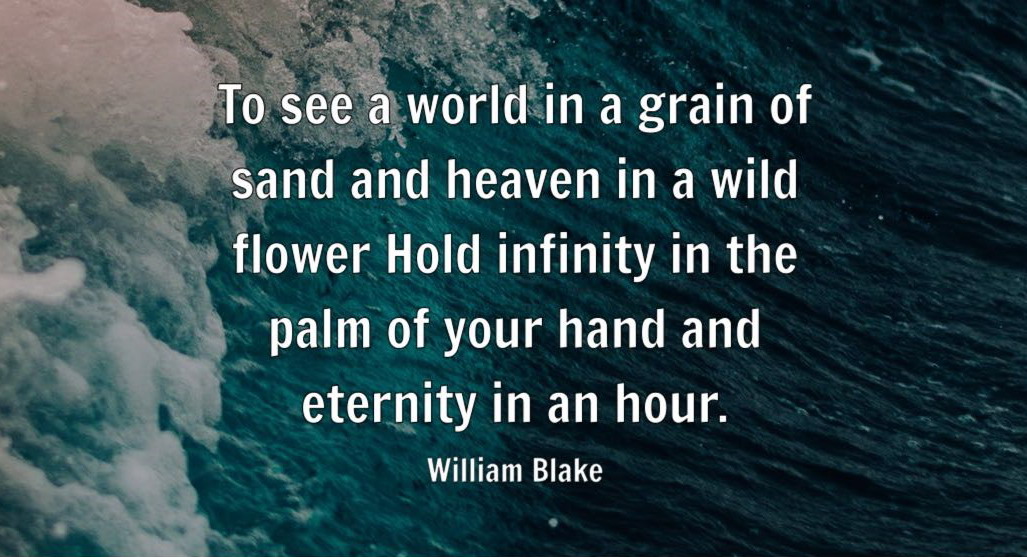
There are, however, a few of us who do not aspire to a way of life-based on short-term materialistic self-gratification. Some rare individuals understand the interconnectedness of everything in the natural world and the need to tread lightly and with care. This respectfulness is often expressed in mystical language that appeals to me, even though I have no belief in the supernatural. William Blake, for one, was able to feel reverence for a single grain of sand.
And Bob Dylan echoed these sentiments in his song, Every Grain of Sand.

Listen to Every Grain of Sand here.
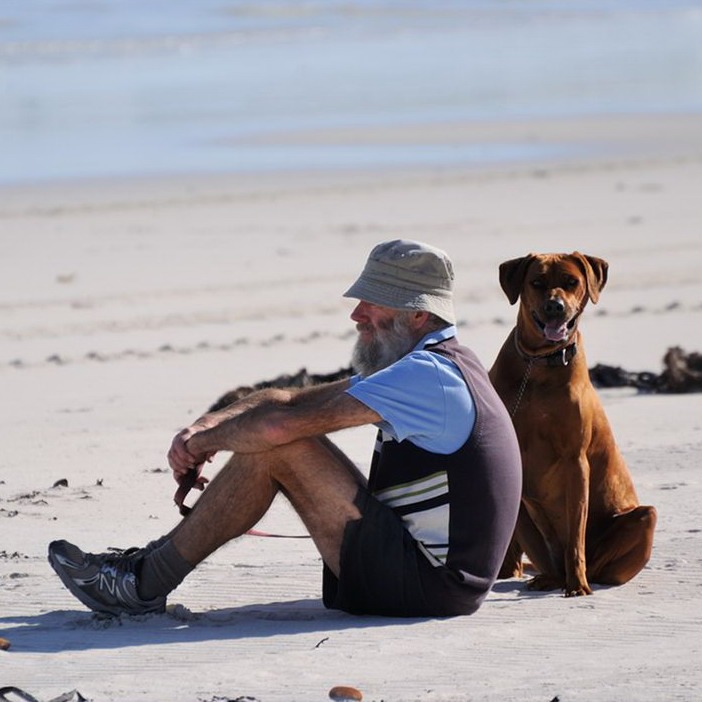
As for me, I often take pleasure from watching the movement of sand on the beach and along the line of dunes. The sea and the wind are constantly at work, sometimes imperceptibly and at other times with dramatic violence. Knowing that this fine white sand has been in the making for hundreds of millions of years helps me to shun the delusion that my life is of any consequence. To talk of achievements, successes and failures is laughably absurd. In a day and a night, the strong northwester erases all footprints and reshapes the crest of a dune formed by a week-long southeaster. In a hundred years’ time, what trace will be left of my existence? And in a few thousand years there will be little evidence left to show that a pernicious species of animal blighted the planet for a brief period before becoming extinct.
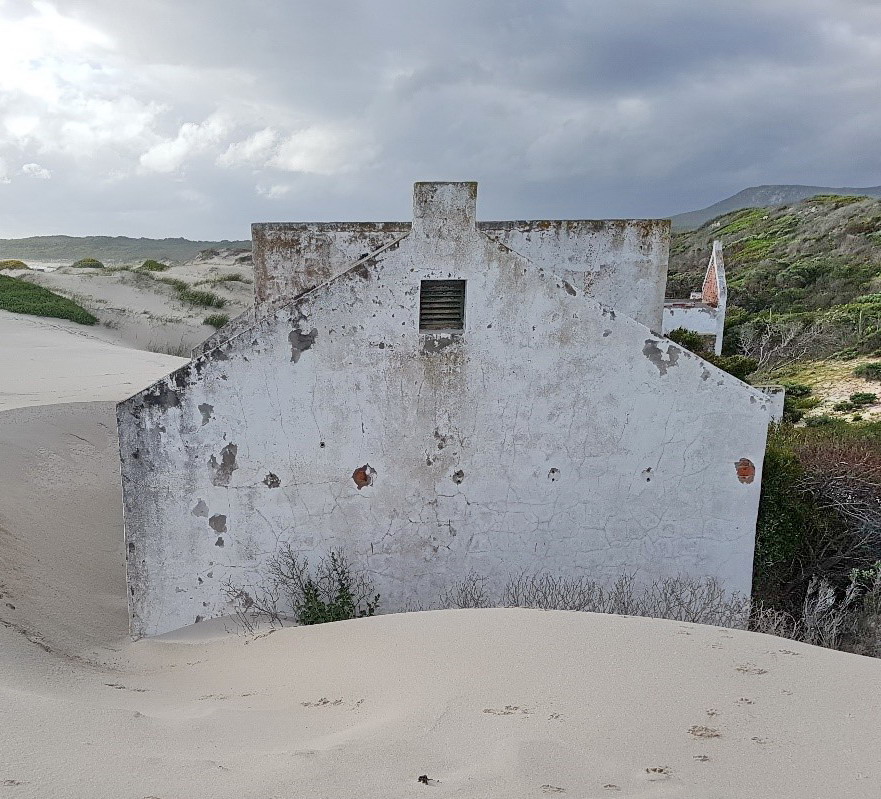
If, after 50 years, this is all that is left of the houses at Plaatjies Kraal, in another 50 years all evidence of human habitation will have been erased. Only sand will remain.
To view my longer work as an author, you can find me on Smashwords here.
This is my writer's blog and it's a pleasure to have your company. You’ll see that the site is designed to showcase my writing.
View Profile
What is Xplorio?
Xplorio is your local connection allowing you to find anything and everything about a town.
Read More