



How Your Attention Shapes Your Life
All your actions will flow to where your attention is.
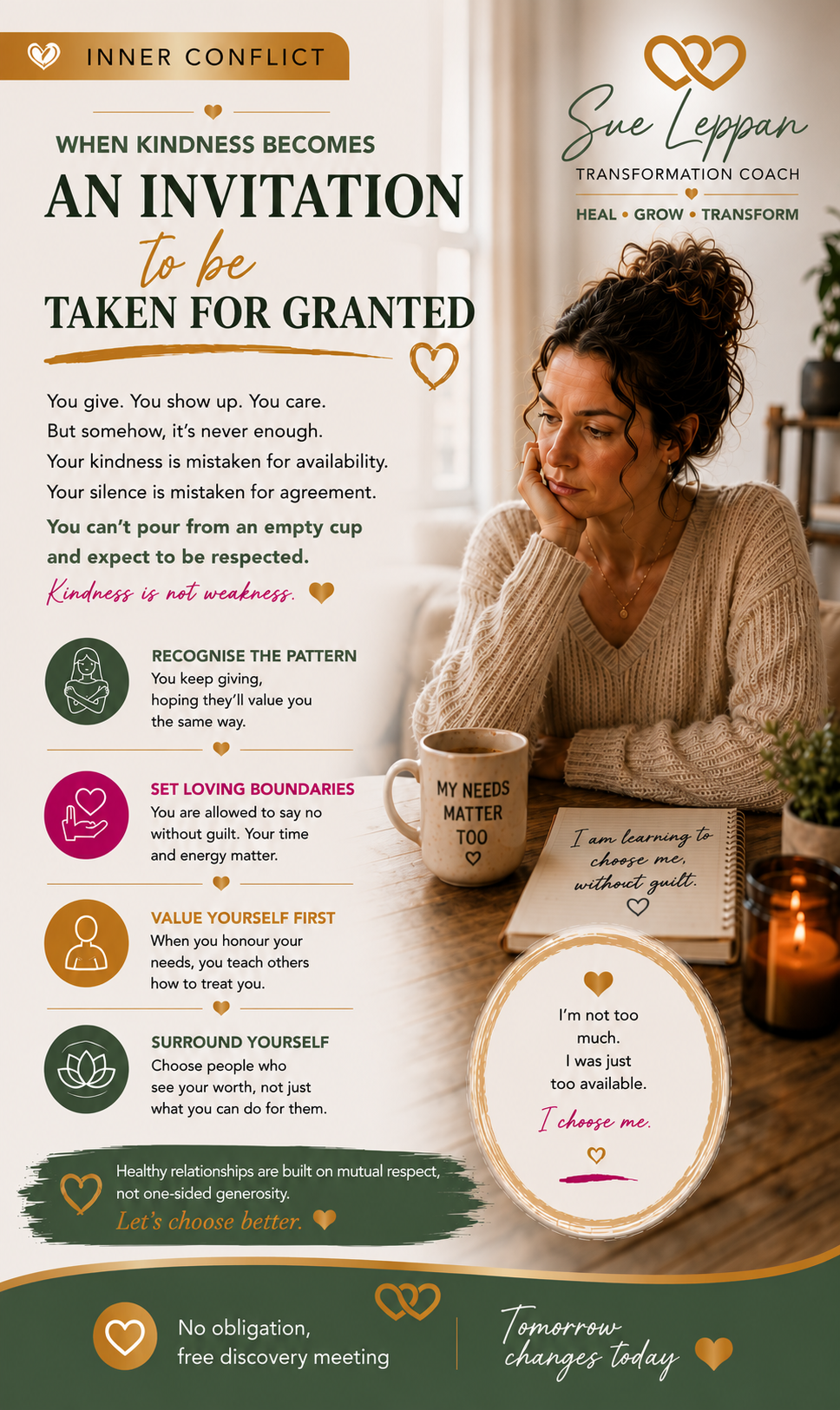
Last week, we explored how many people spend their lives searching for recognition, acceptance and validation outside of themselves. When we do not fully recognise our own worth, we often compensate by giving more, doing more and becoming more available to others in the hope that our efforts will finally prove that we are enough.
The challenge is that this pattern does not simply leave us exhausted. It also leaves us vulnerable.
Many people believe that being loving means always being available. They believe that being kind means always saying yes. They believe that being a good person means putting the needs of others before their own. Over time, these beliefs can become so deeply ingrained that they begin to feel responsible for other people's emotions, other people's problems and other people's happiness.
At first, this may appear admirable. It may even earn appreciation and praise. However, beneath the surface, something far more significant is taking place. A person who struggles to recognise their own value often finds it difficult to establish healthy boundaries. They worry that saying no will disappoint someone. They fear that expressing their needs will be viewed as selfish. They become uncomfortable with the idea that their own well-being deserves the same consideration they so freely give to everyone else.
Unfortunately, not everyone who enters our lives will respect this way of being.
Some people consciously manipulate. Others do so unconsciously. Some will continue to take because they have learned that you will continue to give. Some will expect more because you have taught them that your boundaries are flexible. Others will happily accept your sacrifices while rarely considering the cost to you.
This is not always because people are cruel. It is often because human beings naturally adapt to what is available. If you consistently place yourself last, people may begin to assume that this is where you belong.
The deeper question is not why others take.
The deeper question is why you continue to give beyond your emotional capacity.
This is often where self-love enters the conversation.
Many people associate self-love with confidence, positive thinking or self-care. While these are valuable, authentic self-love runs much deeper. Self-love is the ability to recognise your own value without requiring constant confirmation from the outside world. It is the ability to honour your own needs without guilt. It is the willingness to acknowledge that your well-being matters.
When a person begins developing genuine self-love, something remarkable happens. Their relationships begin to change. They become clearer in their communication. Their boundaries become stronger. They stop over-explaining their decisions. They stop apologising for having needs. They no longer feel compelled to earn their place in other people's lives through endless sacrifice.
The mentor teaches:
A life lived in authentic self-love and honour garners respect.
This is not because people suddenly become different. It is because you become different.
You begin to recognise your own worth.
You begin to honour your own limits.
You begin to understand that love does not require self-abandonment.
Perhaps one of the greatest acts of self-kindness is recognising that you are allowed to take up space in your own life. You are allowed to have needs. You are allowed to protect your energy. You are allowed to say no when no is the healthiest answer.
The truth is that self-love does not make you less caring. It makes your care more sustainable. It allows you to give from abundance rather than depletion. It allows you to support others without losing yourself in the process.
As you reflect today, consider this question:
Where in your life have you mistaken self-sacrifice for love, and what might change if you began honouring yourself with the same kindness you offer everyone else?
Sue Leppan is a life, transformation and holistic wellness coach based in Sandbaai, Hermanus. Providing therapy for a range of challenges, Sue specialises in targeting and dealing with emotional trauma, self-doubt, depression, stagnation and self-centring. Whether you need help with personal issues ...
View ProfileXplorio is your local connection allowing you to find anything and everything about a town.
Read MoreAll your actions will flow to where your attention is.
We can become trapped in our inner battle because one part of us is still fighting what we want to break free from...
How does your current state serve you?
Emotional pain and inner conflict is not your only option.
Nothing changes outside unless it changes inside first.
You are irreplaceable - do you treat yourself as such?