

Western Veil Nebula Captured from Pearly Beac...
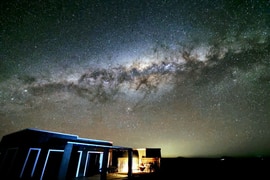
We had some pretty dark and reasonably clear skies in the run-up to New Moon, which was today (09/11) at 09:02.
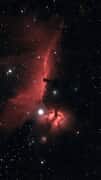
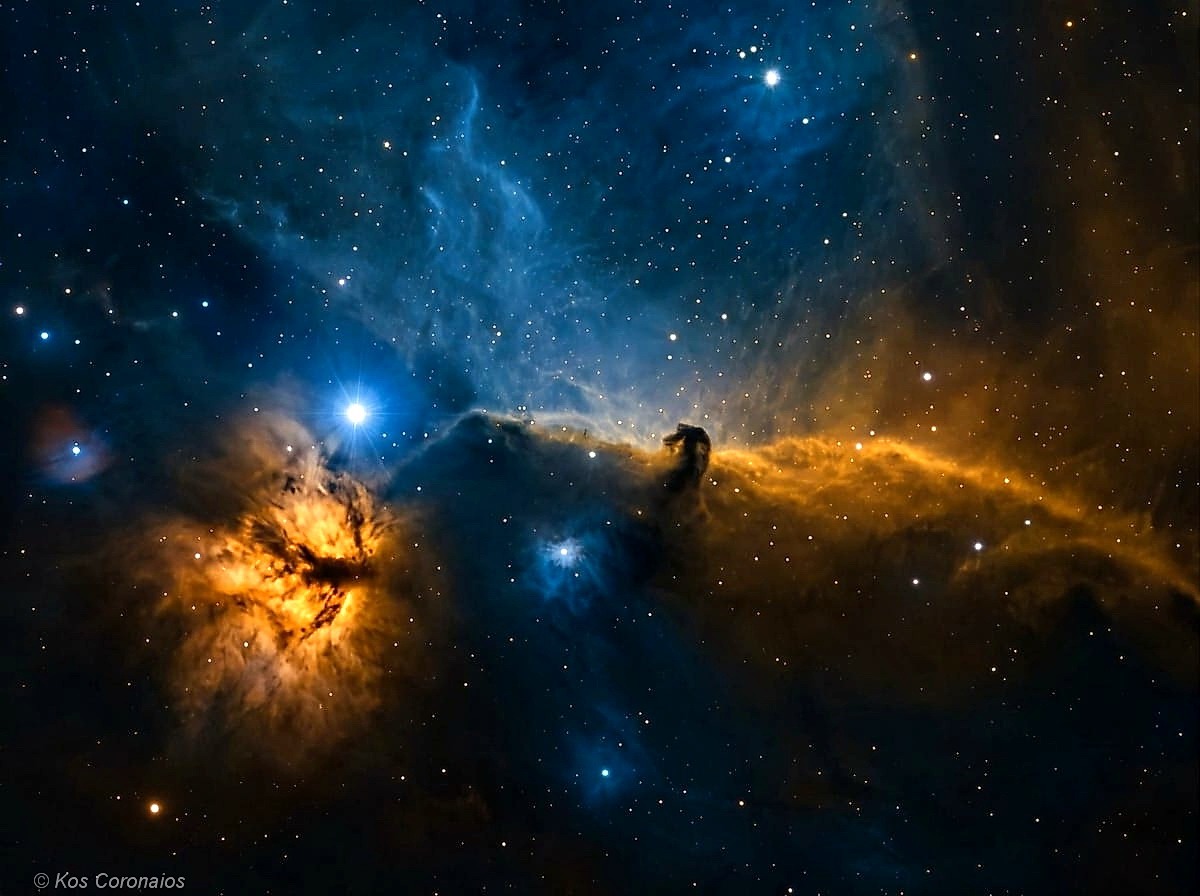
The iconic Horsehead Nebula and Flame Nebula in the constellation Orion. Two hours of data over successive mornings from Pearly Beach using a Seestar S30 Pro in equatorial mode, processed in the Seestar app, Siril, and ACDSee. While these nebulae naturally glow deep red in true-color photographs due to excited hydrogen gas, this image has been processed using a narrowband false-color palette (similar to the Hubble SHO palette). Filters are used to isolate light from specific ionized elements such as sulfur, hydrogen, and oxygen, mapping them to gold, orange, and blue hues. This technique highlights intricate structural filaments and shockwaves within the gas clouds that would otherwise blend together.
The image features the following deep-sky objects:
Horsehead Nebula (Barnard 33). Seen near the centre, this dark nebula consists of dense interstellar dust that blocks the light from the bright emission nebula IC 434 behind it, creating its famous silhouette resembling a chess knight.
Flame Nebula (NGC 2024). Located on the lower left, this bright emission nebula is energized by intense ultraviolet radiation from the nearby star Alnitak, which causes the surrounding hydrogen gas to glow.
Alnitak (Zeta Orionis). The brilliant blue-white supergiant star just above and slightly to the right of the Flame Nebula serves as the easternmost star of Orion's Belt and illuminates much of the surrounding cosmic gas.
NGC 2023. This bright blue reflection nebula sits just below and to the left of the Horsehead's silhouette, glowing as dust reflects the light of a massive young star hidden inside.
Both nebulae (B33 & NGC2023) are part of the vast Orion Molecular Cloud Complex, located roughly 1375 to 1500 light-years away from Earth.
Southern Cape Astronomy Club meets at least once a month for stargazing or observation evenings close to new Moon or during astronomical related events. The well-established club is based in Pearly Beach just outside Gansbaai.
View ProfileXplorio is your local connection allowing you to find anything and everything about a town.
Read MoreWe had some pretty dark and reasonably clear skies in the run-up to New Moon, which was today (09/11) at 09:02.
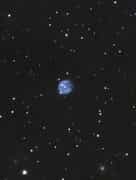
NGC 246 (also known as the Skull Nebula or Caldwell 56) is a planetary nebula in the constellation Cetus (The Whale), discovered by William Herschel in 1785.
Please note, this is not an AI-generated site.
Just a quick stack of a few DSO's from the early hours on Sunday morning (11/10/2026).
Three images with an S30 Pro on EQ mode from last night (04/1/2026).
With the Moon out of the way and weather improving somewhat, there was a few hours gap last night for collecting a few photons.