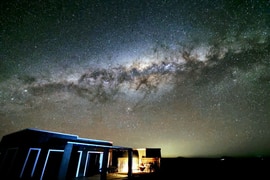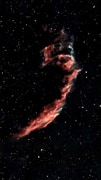






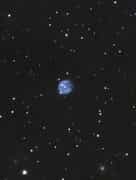
NGC 246 Skull Nebula Captured from Pearly Bea...
NGC 246 (also known as the Skull Nebula or Caldwell 56) is a planetary nebula in the constellation Cetus (The Whale), discovered by William Herschel in 1785.

Planet visibility in March:
Mercury can be seen in the evening sky at the beginning of the month, and at dawn late in the month.
Venus is prominent in the morning sky throughout March. Mars can be seen in the evening sky.
Jupiter can be seen in the morning sky and by mid-month can be seen for more than half the night.
Saturn can be seen in the morning sky for the entire month. The Moon occults Saturn on the morning of March 29th, prediction times to follow.
Visible in our evening skies is Comet C/2018 Y1 Iwamoto:
C/2018 Y1 (Iwamoto) is a near-parabolic comet with a retrograde orbit discovered on December 20, 2018 by Japanese amateur astronomer Masayuki Iwamoto. It passed closest to Earth on February 13, 2019 and is expected to reach a magnitude of between 6.5 and 7.5, visible in binoculars or a small telescope (Wiki).
I nabbed it on Friday 22nd February at around 21: 00. Comet could not be acquired in the finder scope (8x50), live view of the camera and attempts at binocular observation (12x50), were also unsuccessful.
Conditions were hazy, with low level cloud drifting in and out of the target area. The comet was just under 20º above the northern horizon, in the constellation Auriga (Charioteer).
I subsequently imaged the comet again on the 24th of February and on the 1st March. Images are annotated.
Southern Cape Astronomy Club meets at least once a month for stargazing or observation evenings close to new Moon or during astronomical related events. The well-established club is based in Pearly Beach just outside Gansbaai.
View ProfileXplorio is your local connection allowing you to find anything and everything about a town.
Read MoreNGC 246 (also known as the Skull Nebula or Caldwell 56) is a planetary nebula in the constellation Cetus (The Whale), discovered by William Herschel in 1785.
Please note, this is not an AI-generated site.
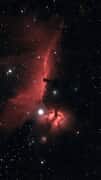
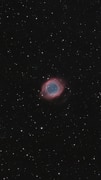
Just a quick stack of a few DSO's from the early hours on Sunday morning (11/10/2026).
Three images with an S30 Pro on EQ mode from last night (04/1/2026).
With the Moon out of the way and weather improving somewhat, there was a few hours gap last night for collecting a few photons.
We've had some good weather the last couple of weeks; here are a few astro images.