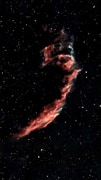





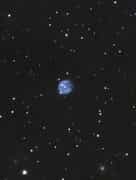
NGC 246 Skull Nebula Captured from Pearly Bea...
NGC 246 (also known as the Skull Nebula or Caldwell 56) is a planetary nebula in the constellation Cetus (The Whale), discovered by William Herschel in 1785.

The Moon, a couple of days after first quarter as it heads towards Full Moon on the 31st January (15:27 SAST), and the first of two lunar eclipses of the year. The eclipse on the 31st will be visible from North America, Oceania, Russia, Asia, Middle East, northern Scandinavia and eastern Europe.
Unlike solar eclipses, which are only visible from a narrow path, lunar eclipses are visible anywhere on Earth where the Moon is visible in the sky at the time. For Southern African observers, the Moon will unfortunately be below the horizon for the eclipse on the 31st January. The second eclipse on the 27th July can be seen from South Africa, with the Moon entering the Earths umbra at 20:24 SAST. Both these eclipses are total eclipses, no partial lunar eclipses occur in 2018.
Total lunar eclipses can last for 100 minutes, and do not require eye protection like solar eclipses. During a total eclipse the Moon darkens gradually as it moves through the Earth's shadow, first the lighter penumbra and then the dark umbra. The colour of the Moon during totality depends on how much light is scattered by the Earth's atmosphere and is usually a very dark coppery-red colour.
Images © K. Coronaios, taken with a Canon 60D at prime focus, telescope: Meade LX 200, 12” f10, a Meade Series 400, f6.3 focal reducer was used for the annotated image.
Southern Cape Astronomy Club meets at least once a month for stargazing or observation evenings close to new Moon or during astronomical related events. The well-established club is based in Pearly Beach just outside Gansbaai.
View ProfileXplorio is your local connection allowing you to find anything and everything about a town.
Read MoreNGC 246 (also known as the Skull Nebula or Caldwell 56) is a planetary nebula in the constellation Cetus (The Whale), discovered by William Herschel in 1785.
Please note, this is not an AI-generated site.
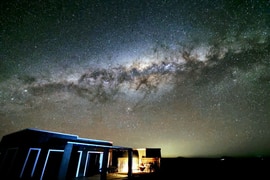
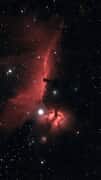
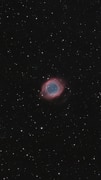
Just a quick stack of a few DSO's from the early hours on Sunday morning (11/10/2026).
Three images with an S30 Pro on EQ mode from last night (04/1/2026).
With the Moon out of the way and weather improving somewhat, there was a few hours gap last night for collecting a few photons.
We've had some good weather the last couple of weeks; here are a few astro images.