















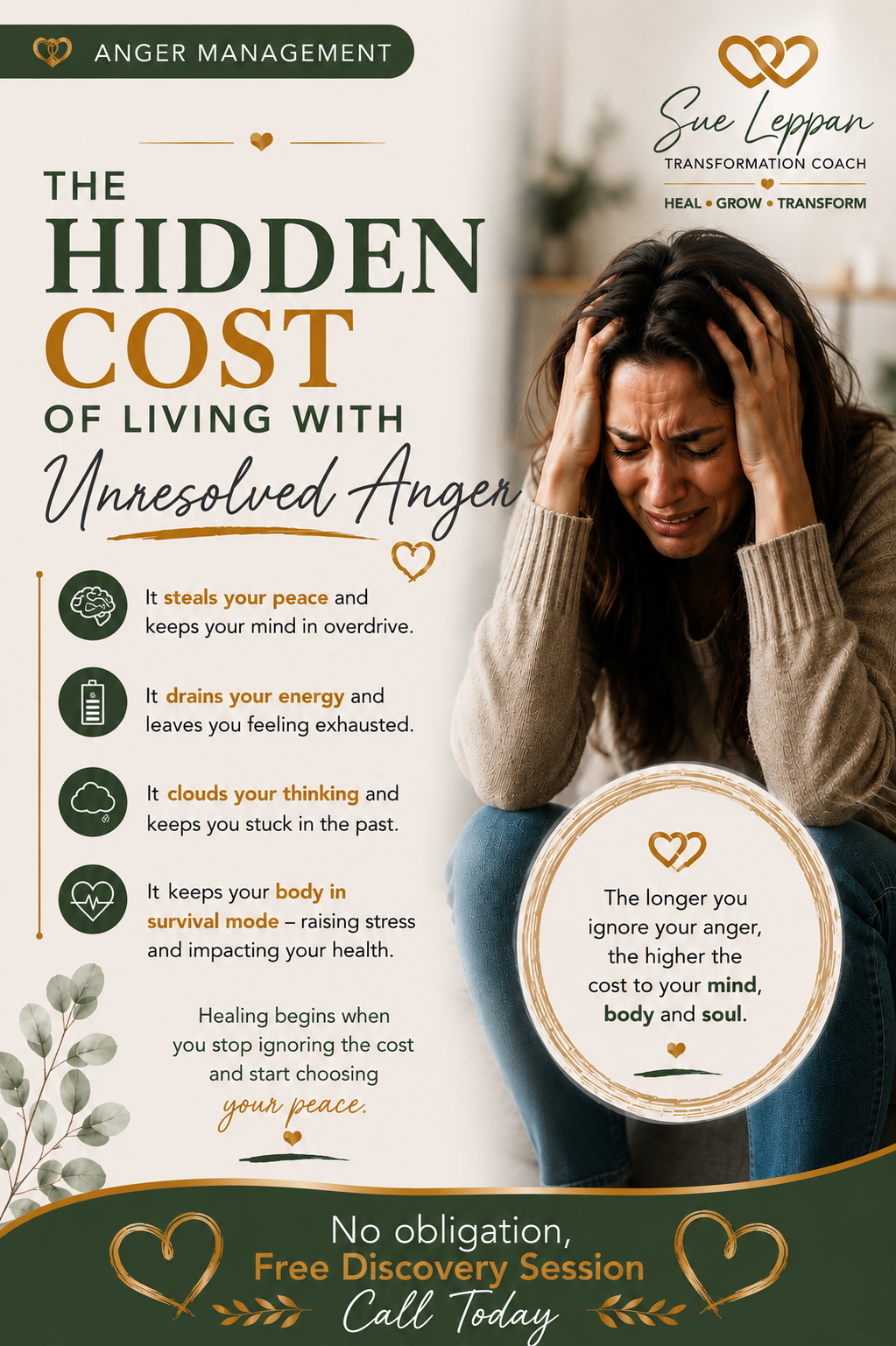
The Hidden Cost of Living Without Self-Worth
One of the greatest misconceptions about self-worth is that it only affects how we feel about ourselves. In reality, it quietly influences every decision we make, every relationship we build, every opportunity we pursue and every boundary we either establish or surrender. The quality of your life can never consistently exceed the value you unconsciously place upon yourself. If, deep within your subconscious mind, you believe you are not enough, your choices will unconsciously reflect that belief, regardless of how successful or capable you appear to others.
Many people spend years trying to fix the visible symptoms while never recognising the invisible cause. They blame their employer, their partner, their family, their financial circumstances or the pressures of life itself. While these external challenges certainly contribute to stress, they are often not the true source of the emotional pain. The deeper issue is that somewhere along the journey, they stopped believing that they deserved to be treated with kindness, fairness and respect. They became accustomed to accepting less than they truly desired because asking for more felt uncomfortable, risky or undeserved.
Low self-worth often disguises itself as positive character traits. It looks like being endlessly accommodating. It looks like always putting others first. It looks like carrying responsibilities that belong to someone else because saying "no" creates anxiety. It looks like perfectionism, people-pleasing, overworking and constantly proving your value through achievement. Society often rewards these behaviours, yet beneath them frequently lies a person who is desperately trying to earn the acceptance they have never learned to give themselves.
Psychology explains that our self-worth is largely formed through repeated emotional experiences, particularly during childhood and significant relationships. If love felt conditional, if approval had to be earned, or if your opinions and emotions were dismissed, your subconscious mind may have formed the belief that your value depends on pleasing others or avoiding conflict. These beliefs become deeply embedded and begin directing your behaviour without your conscious awareness. As adults, we often continue living according to emotional rules that were created decades earlier, even though they no longer serve us.
Neuroscience shows that every repeated thought and emotional response strengthens corresponding neural pathways within the brain. The more often you tell yourself that your needs are less important, the more automatic that belief becomes. Eventually your brain no longer questions it. It simply accepts self-sacrifice as normal. The nervous system adapts to living in a constant state of vigilance, always scanning for ways to avoid rejection, criticism or conflict. This ongoing activation keeps the body under stress, contributing to fatigue, anxiety, poor sleep, irritability, difficulty concentrating and emotional exhaustion. Many people believe they are simply overwhelmed by life, when in reality they are exhausted by continuously abandoning themselves.
Neuro-Linguistic Programming reminds us that our internal dialogue shapes our external experience. The words we repeatedly say to ourselves become instructions for the subconscious mind. Thoughts such as "I don't want to upset anyone," "I have to keep everyone happy," "I should be grateful for whatever I receive," or "I can cope a little longer," may appear harmless, yet they reinforce the belief that your own needs are secondary. Over time, these internal messages create a life where your identity becomes increasingly dependent on meeting everyone else's expectations while losing connection with your own.
From a quantum perspective, the emotional state you habitually occupy influences how you engage with the world around you. When your dominant emotional experience is one of inadequacy or powerlessness, you naturally perceive opportunities, relationships and challenges through that emotional filter. You may tolerate behaviour that others would refuse, settle for circumstances that do not honour your values, or repeatedly attract relationships where your kindness is mistaken for permission to overstep your boundaries. The world begins reflecting the relationship you have with yourself because your beliefs influence your decisions long before they influence your circumstances.
The cost of low self-worth extends far beyond feeling unhappy. It slowly erodes your confidence until you begin doubting your own judgement. It affects your physical wellbeing as chronic stress keeps your nervous system in survival mode. It damages relationships because unspoken resentment eventually replaces genuine connection. It limits your career because you hesitate to ask for the opportunities you deserve. It restricts your business because you undervalue your expertise or compromise your principles to avoid losing clients. Most painfully of all, it distances you from the person you were always capable of becoming.
Many people describe feeling as though they no longer recognise themselves. The vibrant, confident and hopeful person they once were seems to have disappeared beneath years of responsibility, compromise and emotional survival. They begin questioning whether happiness is realistic or whether life is simply meant to feel this heavy. Yet this heaviness is not who they are. It is the accumulated weight of living disconnected from their own worth.
The encouraging truth is that self-worth is not something you have to earn. It is not a reward for achieving more, pleasing more people or becoming someone different. Your worth has always existed. It has simply been buried beneath years of limiting beliefs, emotional conditioning and repeated experiences that convinced you otherwise. The anger, frustration and exhaustion you feel are not signs that you are failing. They are invitations to begin rebuilding the relationship you have with yourself.
As you reflect today, ask yourself this question with complete honesty: What has it cost me to keep choosing everyone else over myself? Consider not only what you have lost externally, but also what you have sacrificed internally. How much peace, confidence, health, joy and self-respect have you exchanged in the hope of being accepted or avoiding conflict?
Transformation begins the moment we stop measuring our value through the approval of others and start recognising the inherent worth that has always existed within us. When you begin to honour yourself with the same kindness and compassion you so freely offer everyone else, your life begins to change from the inside out. Your decisions become clearer, your boundaries become healthier, your relationships become more authentic, and the anger that once felt overwhelming begins to lose its purpose because the injustice within is finally being healed.