
















Releasing the Love Hormone Through Baby Massage
Oxytocin is a hormone and neurotransmitter in your body that is linked to bonding, stress reduction and social behaviour. It also regulates childbirth, lactation and promotes positive feelings. It is commonly known as the 'love hormone' or 'hormone of attachment'.
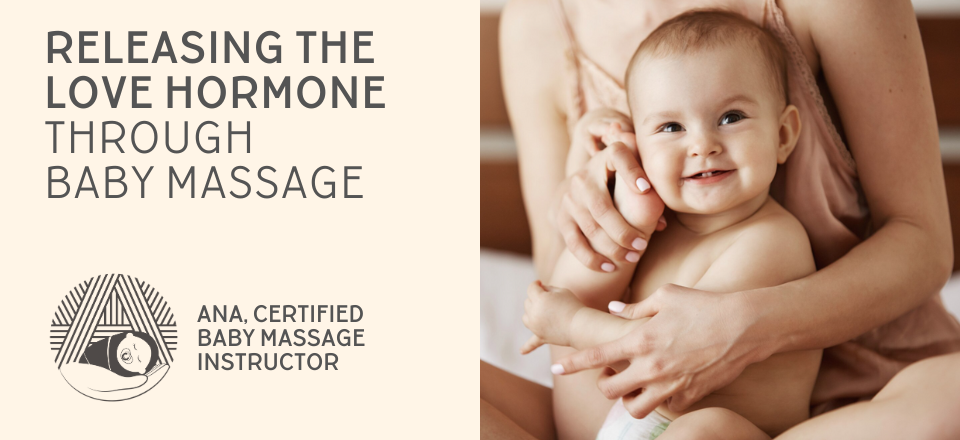
Gentle massage and skin‑to‑skin contact help the body release oxytocin because slow, soft strokes activate special touch nerves that tell the brain to calm down. Massage also brings the baby and caregiver closer, encouraging eye contact and soothing voices, which raises oxytocin even more. When both baby and caregiver release oxytocin during these moments, it creates a positive loop - each person’s calm, caring behaviour boosts the other’s feeling of safety and connection.
By releasing the love hormone through regular baby massage, both you and your little one can enjoy the benefits it has to offer:
Bonding - helps parents and baby feel close and secure
Oxytocin makes both the baby and caregiver want to be near each other. For caregivers, it sparks warm, protective feelings; for babies, it helps them prefer and trust their caregiver. That repeated closeness builds a strong emotional connection.
Stress reduction - helps calm both baby and caregiver
Oxytocin lowers the body’s stress response, which can mean a slower heart rate and less anxiety. When caregivers are calmer, they soothe the baby more easily, and the baby has fewer long-lasting upset reactions.
Soothing and sleep - makes it easier to relax and fall asleep
Oxytocin creates a sense of safety, helping babies relax after fussing. Paired with gentle touch, it can help babies settle down and fall asleep faster, and sleep more peacefully.
Social sensitivity - helps caregivers notice what the baby needs
Oxytocin makes caregivers more tuned in to the baby’s signals, like yawning, fussing, or looking away. That helps caregivers respond quickly and in the right way, which teaches babies they can rely on the caregiver.
Lactation - supports milk let-down during breastfeeding
Oxytocin triggers the milk ejection reflex (let-down), helping milk flow from the breasts when the baby nurses. Skin-to-skin contact, gentle touch, and calming interactions increase oxytocin, which can make breastfeeding smoother and more comfortable for both mom and baby.
Studies show the gentle skin-to-skin touch and massage have measurable benefits such as higher oxytocin levels, better parent–infant synchrony, less crying and improved sleep after massage, as well as stronger physiological stability and attachment.
If you would like to read more about the studies, here are a few direct links to scientific literature on skin-to-skin contact between caregiver and baby, and oxytocin:
https://pmc.ncbi.nlm.nih.gov/articles/PMC8082987/
https://pmc.ncbi.nlm.nih.gov/articles/PMC7502223/
https://www.sciencedirect.com/science/article/pii/S2352013219303229
https://www.sciencedirect.com/science/article/abs/pii/S0163638319301663
Baby massage is a safe, research-supported practice that boosts oxytocin for both baby and caregiver, helping them feel calmer, more connected, and better regulated. Always consult your paediatrician, clinician, or a certified baby massage instructor to learn the correct techniques, dos and don'ts.
Ana, Certified Baby Massage Instructor
Hermanus and the surrounding areas.