




Life After Fire: Fynbos vs. Invaders
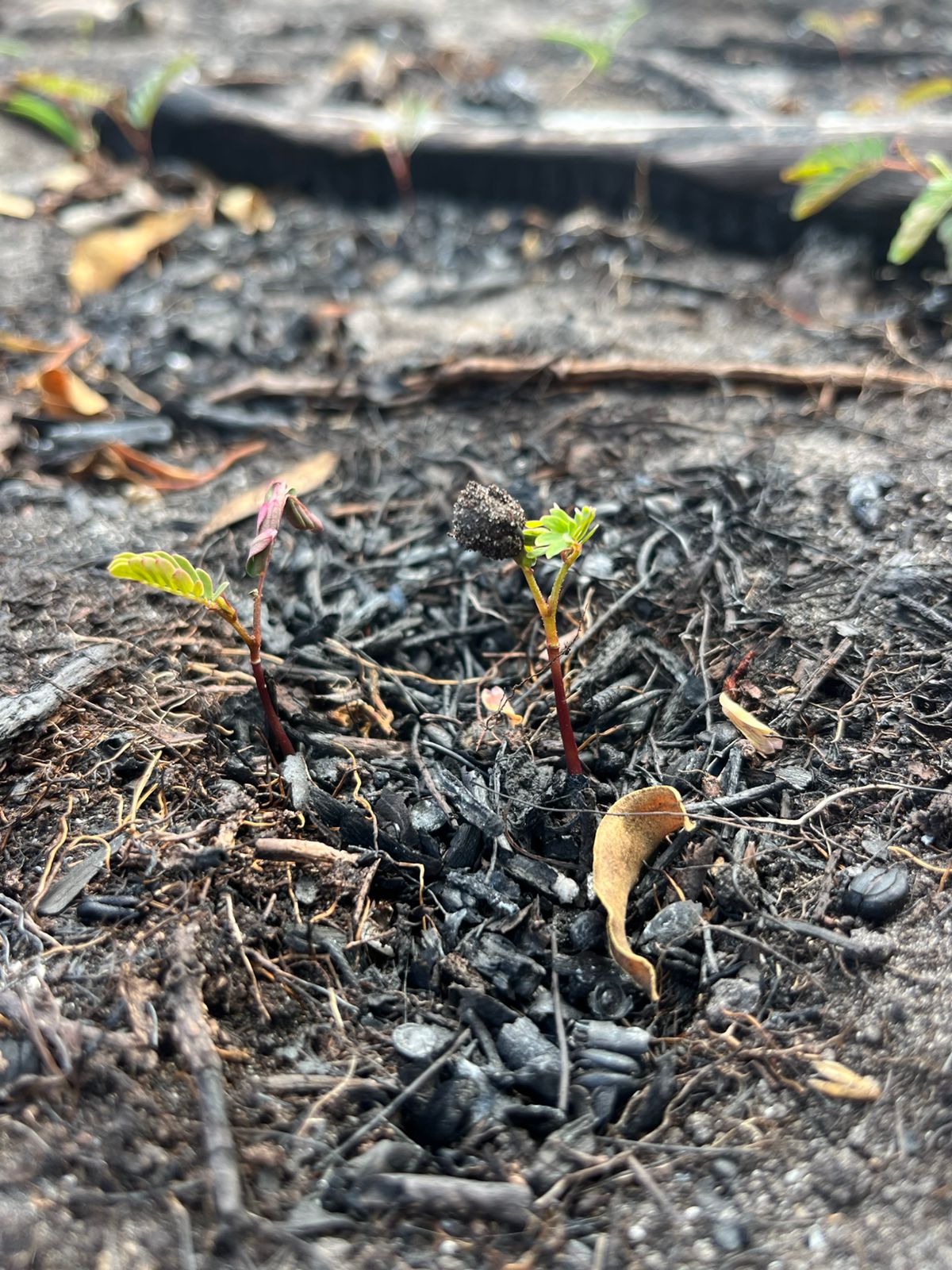
After the summer wildfire, life begins to return almost immediately. It returns with such speed and surprising diversity that it becomes clear that the natural landscape is adapted and suited to fire even when humans struggle to recover from the emotional toll.
However, this little shoot is a stinkbean which is a tenacious invasive plant species.
Although fire is crucial for the germination of fynbos seeds that are stored in the ground for many years, it also favours the seed of invasive plants that have been buried in the ground for decades. Here is an example of an area that the Green Stewards are working on that was 76-100% covered in eucalyptus. After the fire, we have noticed a secondary invasion of stinkbeans that can be removed by hand-pulling. Because they are young, no equipment nor herbicide is needed...just time and care.
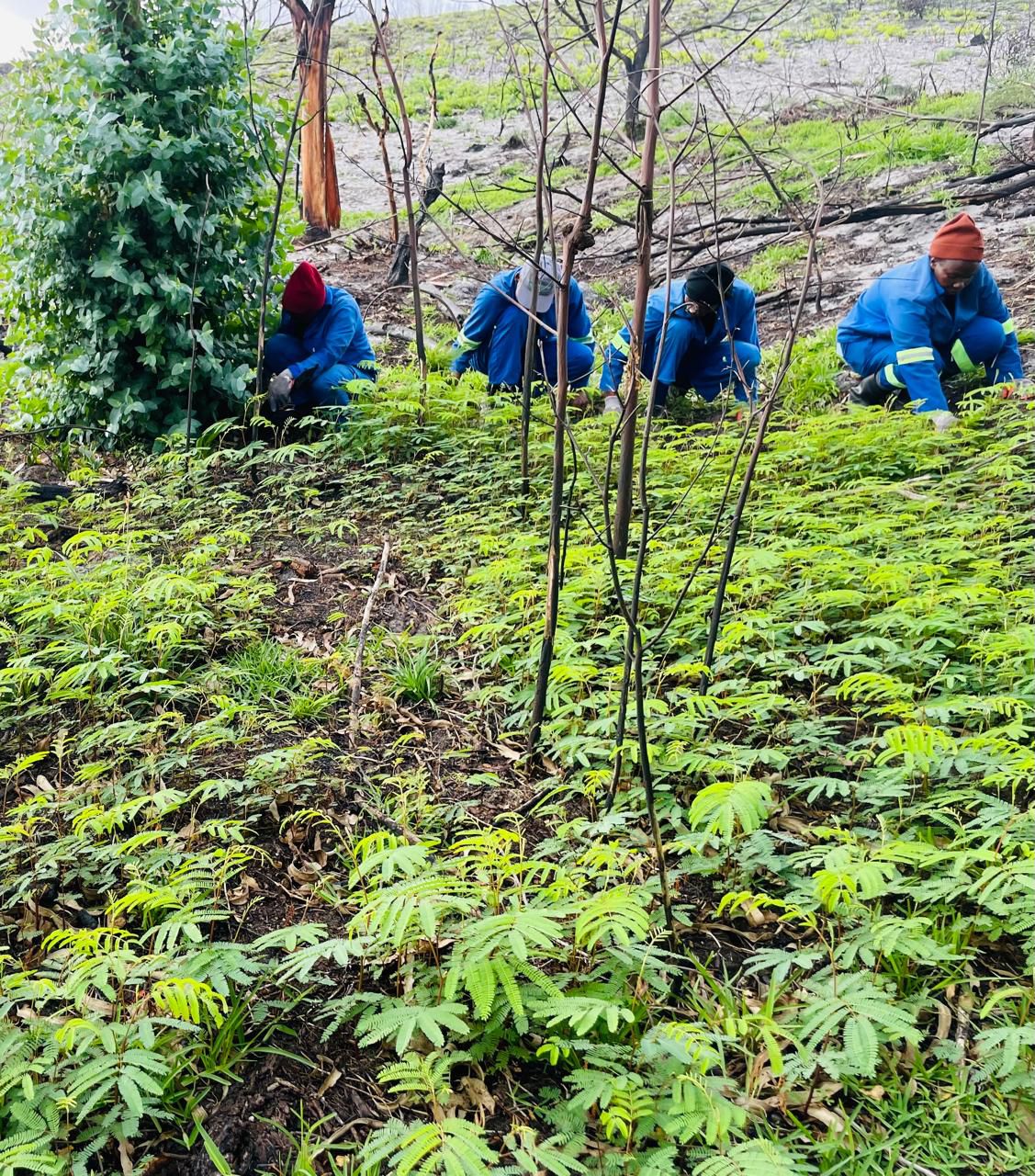
Hand pulling little invaders before they get too big
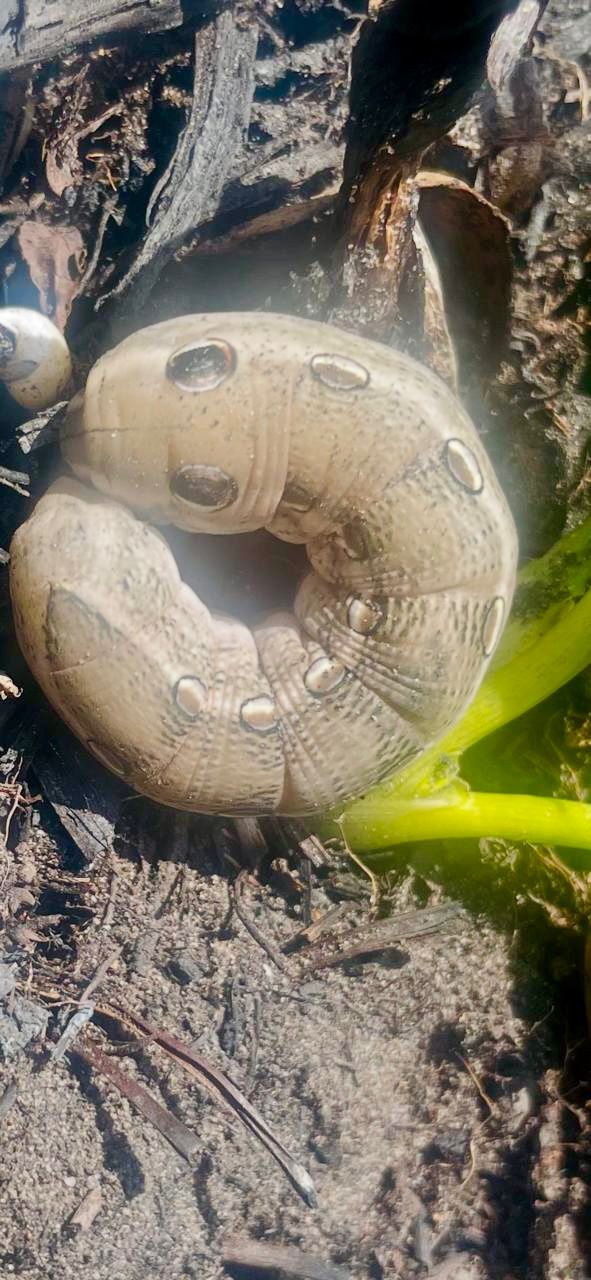
The circle of life... this hawkmoth larva was spotted by the Green Stewards while they were hand-pulling the stinkbean shoots.
This is a parrot-beaked padloper making its way through burnt veld this morning. Of the two tortoise species in the area, this one is by far the least common and our reserve manager was thrilled to spot it. Turn the volume up to hear the sound of his movement which we think sounds like the squeak of leather pants.