


Fynbos After Fire: Wildflowers and Invasive Control
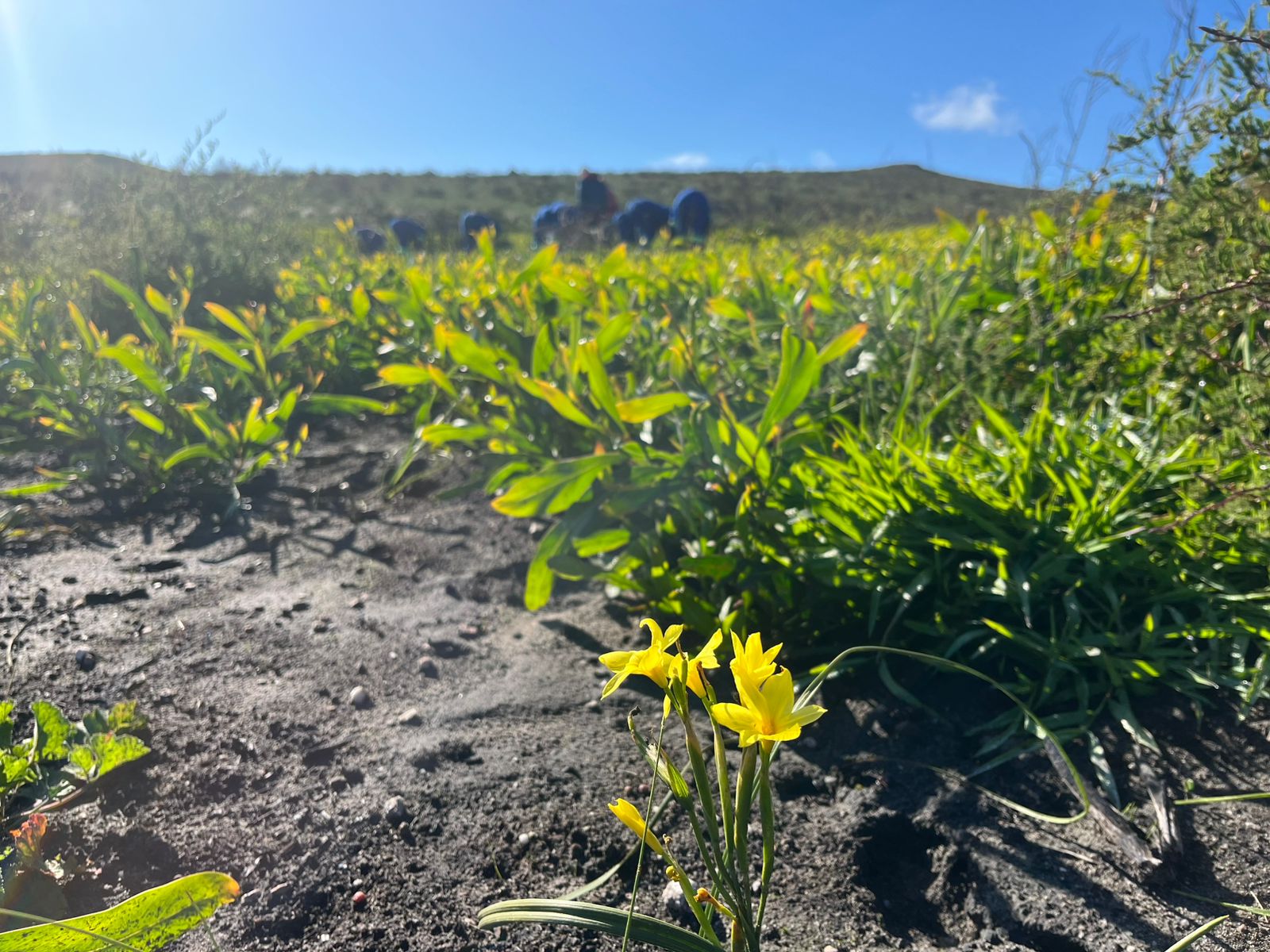
You will be delighted to know that this gorgeous yellow bloom is called Moraea pyrophila, a fire ephemeral that is only seen after a fire burns through a landscape.
Look more closely and you will notice that in the background, invasive Port Jackson plants have sprouted in abundance as they are also triggered to germinate by the summer fire, followed by winter rains.
That means that we have a unique and small window of opportunity now, when these invasive plants in the local conservancy are still small, to hand-pull and remove the Port Jackson without chainsaws or herbicides. This creates work for locals, but it also protects the Moraea pyrophila and its ecosystem, and it builds good fire management practices for future summer fire seasons. Adult invasive plants add to the fire load and make the natural fire cycles within fynbos far more dangerous and damaging.
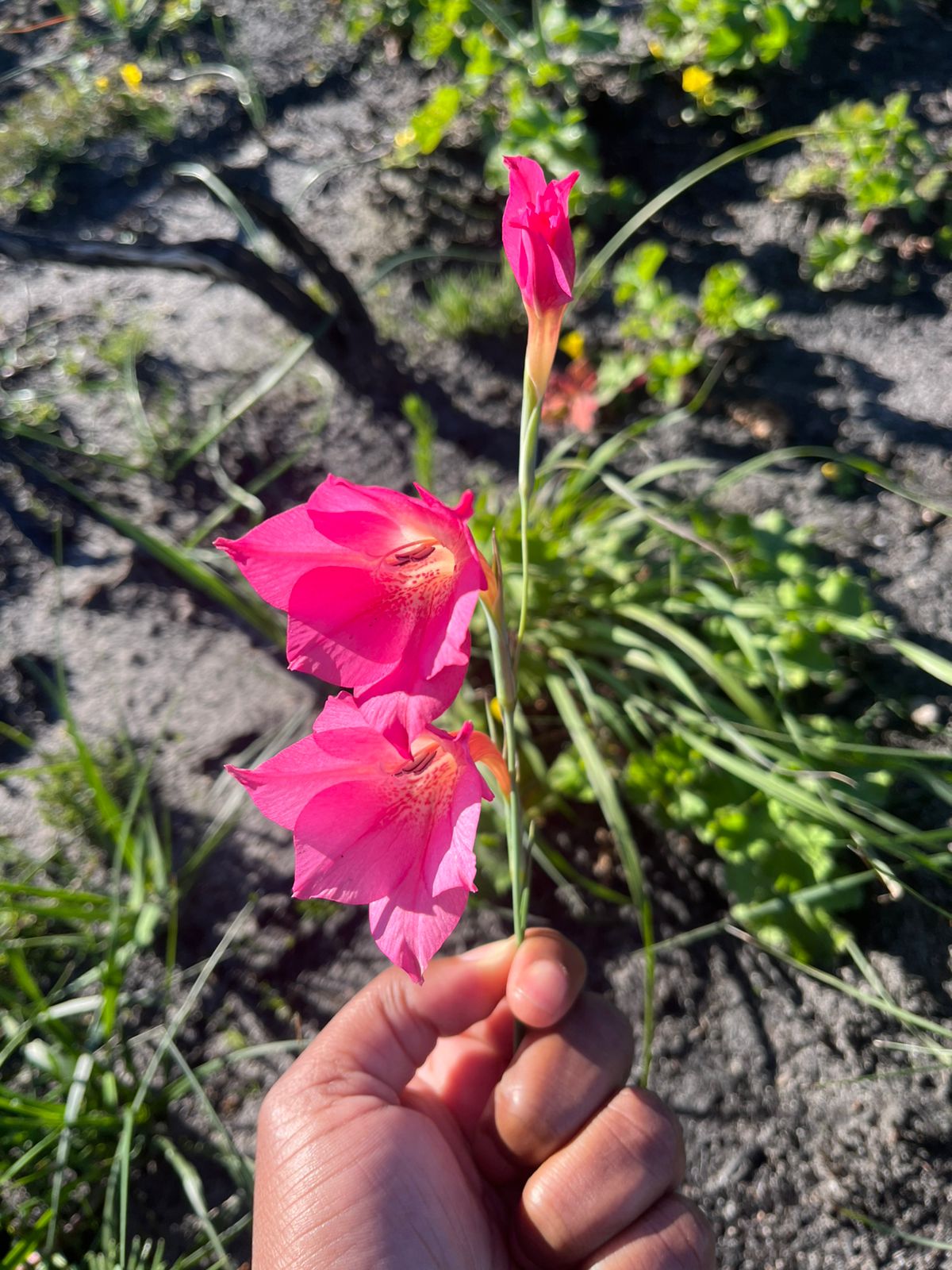
This Gladiolus meridionalis is pretty in pink as it sprouted on a farm within the local conservancy, where a team of plant clearing women were working to hand-pull invasive plants after the summer fire. The invasive plants seem to grow even faster than the fynbos species in their efforts to reach for the sunlight and tower over the fynbos species.
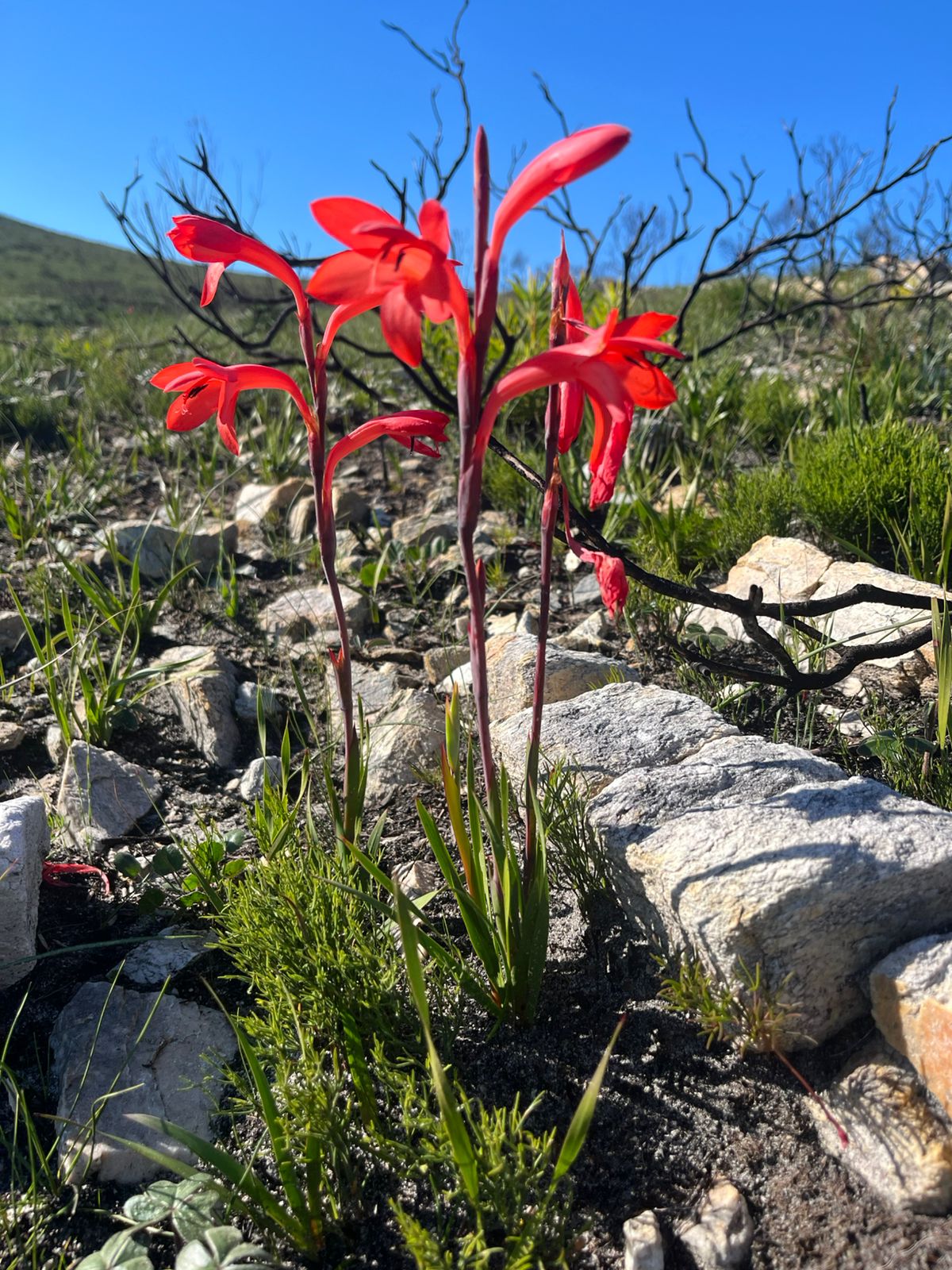
Watsonia spectabilis looks spectacular as it thrives after fire. But invasive plants thrive as well unless we use the opportunity to send teams into the veld to remove the invasive plants while they are still small and before they have reached maturity and seeded.